
Mitigation means stopping the damage from growing
Water mitigation is the set of actions that keep a wet building from getting worse. It is aimed at the first 24 to 72 hours, when drywall wicks water upward, carpet pad soaks through and wood starts to swell. The goal is a smaller loss, not a finished one.
A useful picture is first aid versus surgery. Mitigation is the first aid, applied fast and often by people who never touch a paintbrush. Rebuilding is the surgery that comes afterward, and how big it turns out to be depends heavily on the first days.
What happens, hour by hour
The windows below are typical, not promises, since the real schedule depends on the water category, the materials and how long the water sat before anyone arrived.
| Time window | What is at risk | What is done |
|---|---|---|
| First hours | Spreading water, slip and electrical hazards, wicking into walls | The source is shut off, power safety is checked, extraction begins |
| Hours 2 to 24 | Saturated carpet pad, wet drywall bases, finishes absorbing moisture | Moisture mapping, unsalvageable pad and baseboard removed, drying equipment set |
| Hours 24 to 48 | The point where mold risk typically rises, metal fixtures staining, wood swelling | Dehumidifiers and air movers run continuously, readings taken, wall cavities opened if needed |
| Hours 48 to 72 | Hardwood cupping, trim and cabinet swelling, delamination of laminates | Equipment adjusted, floor systems or mats added, more material removed if readings stay high |
| Day 3 until dry | Hidden moisture in cavities and under floors | Daily readings until materials reach target, then equipment comes out |
The first hour in your own house
You can do a few things before a crew arrives, and they matter. Work from safest to least safe, and stop the moment anything feels unsafe.
- Shut off the water at the fixture or the main, and stop any running appliance.
- Leave the power alone if the panel is wet or the floor is flooded. Cut it only if the panel is reachable dry.
- Lift small items, rugs and furniture legs off wet flooring, and put foil or blocks under heavy pieces.
- Photograph everything before you move it, with a date stamp if your phone allows.
- Call the restoration line, and call your insurer once you know the situation.
Stay out when electricity or sewage is involved
Water around outlets, a panel or appliances can energize a room. Keep out of rooms where water meets electricity, and let the utility or 911 deal with sparks, buzzing or gas odors before any crew starts work. Sewage backing up through a drain also means staying out until a professional assesses it.
How crews find the water and dry the structure
Water travels farther than it shows. A moisture meter checks drywall and framing for readings, and a thermal imaging camera highlights cool, damp zones behind the paint. We combine both into a moisture map, a room-by-room record we can compare with later visits.
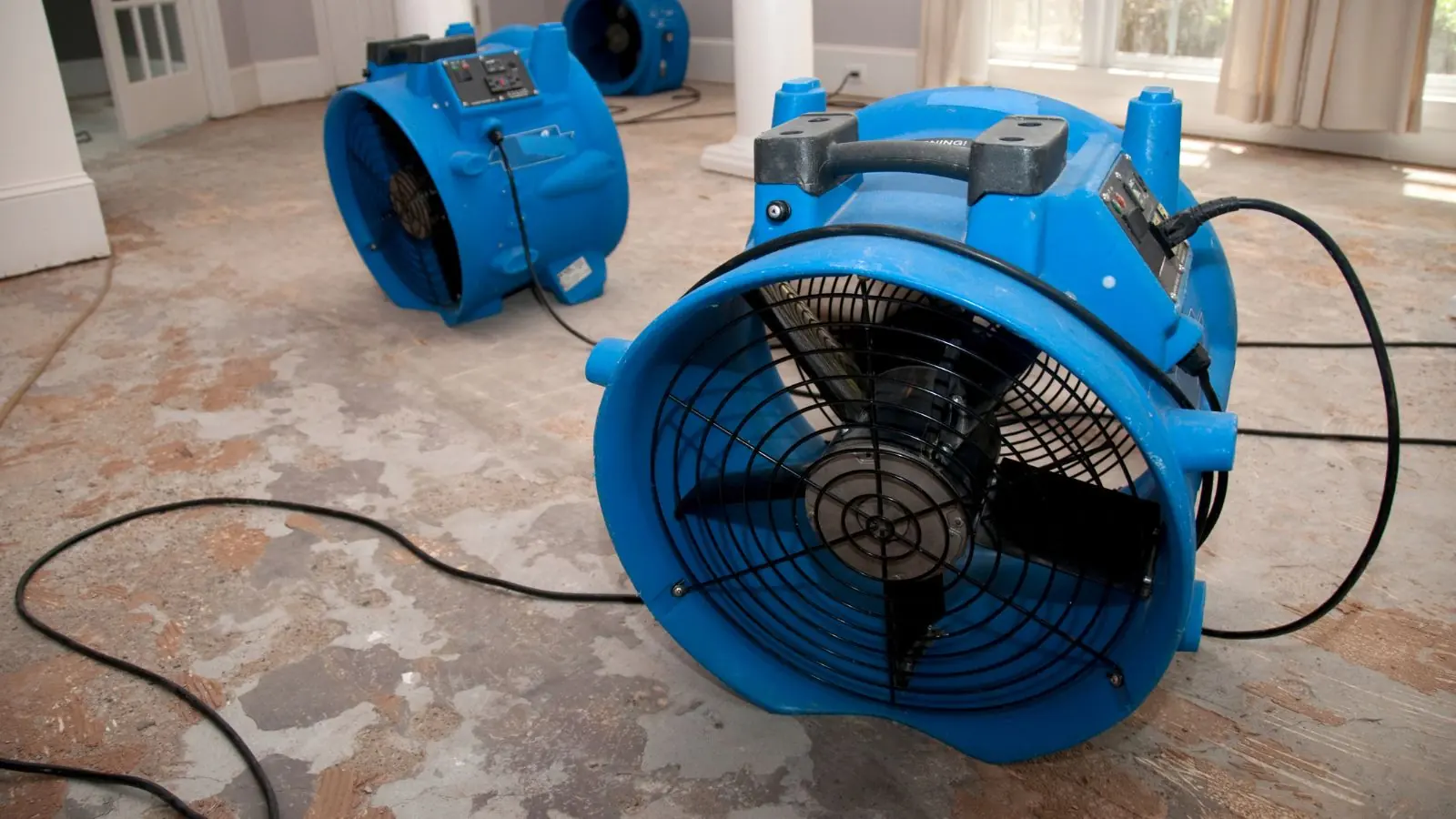
Two kinds of equipment do the drying, and they work as a pair. Air movers push dry air across wet surfaces, and LGR dehumidifiers, short for low grain refrigerant, pull water vapor out of the air so it does not settle back into the materials. Floors with trapped water may also get a mat or injection drying system.
Call (424) 550-5662, day or night. Mitigation is what we start with, and the plan is explained before work starts.
Removing what cannot be saved
Not everything dries, and a good crew says so early. Carpet pad is usually removed because it holds water like a sponge, and soaked insulation and drywall that wicked well above the waterline often go too. Category 3 water, which can carry sewage or outdoor flood contamination, means porous materials come out instead of being dried.
Pulling a damaged baseboard or two feet of drywall can look dramatic. It is usually a smaller job than rebuilding a wall that held moisture for weeks, and the opening lets the cavity dry from the inside. If the loss started with a burst line or backup, our emergency water removal crews extract first, then make these removal calls with the meter in hand.
Mitigation versus restoration, and why early matters
Restoration is the full project and mitigation is its opening act. Mitigation stops the damage and dries the structure, and restoration then cleans and rebuilds. You can read more about our approach on the water mitigation page.
Early action limits the rebuild in a very practical way. Each hour of delay mean more wicking, more swollen trim and more flooring that cannot be saved, and the repair scope grows with each one. We also serve Wilmington and San Pedro from the same dispatch, so harbor-area crews are used to working against that clock.
Harbor City details worth knowing
LADWP lists its water main break line as 1-800-DIAL-DWP (1-800-342-5397). If water is surfacing in the street or the yard before it reaches your walls, report it there first, since a main break is the utility's job and no amount of indoor drying will stop it.
If you are not sure whether an overflow in the street or yard belongs to the city, call one of those numbers, and ask your water utility about anything that touches your meter.
Sources: LADWP news site, LA Sanitation and Environment
Frequently asked questions
Is mitigation the same as restoration?
No. Mitigation is the early work that stops the damage from growing. Restoration includes it and carries on through drying, cleaning and rebuilding.
How long do the dryers have to run?
Drying typically runs several days, though the number depends on the materials, the water category and the starting moisture. Daily readings decide when equipment comes out, not a fixed schedule.
Why does the crew remove drywall that looks fine?
Drywall can wick water upward and hold it inside the wall cavity. A meter or camera may show moisture where the paint looks clean, and opening the wall is how a crew verifies it.
Will my insurer cover mitigation?
That depends on your policy. Insurers commonly distinguish a sudden failure from a slow leak, and they usually treat flood as a separate coverage you buy on its own. Read the water damage section of your policy and keep photos and dated records.
Who do I call for a main break near my Harbor City home?
Call LADWP at 1-800-DIAL-DWP for a main break. For overflows you think belong to the city, LA Sanitation and Environment lists 1-800-773-CITY and 311. Once the source is stopped, call us for extraction and drying.