
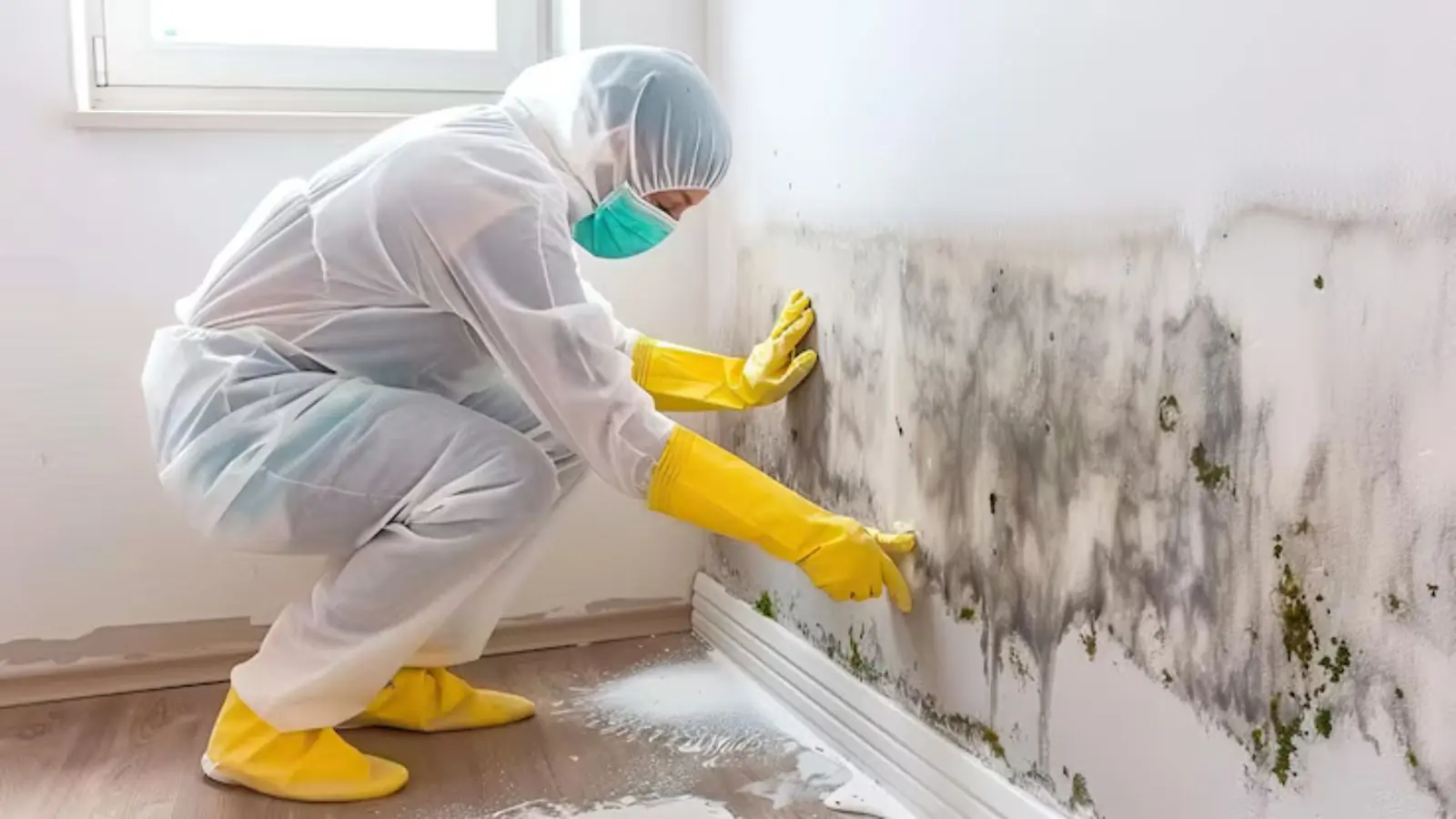
Mold remediation is the controlled removal of mold growth, followed by correcting the moisture that fed it, carried out so spores are contained rather than spread through the rest of the home. Mold needs moisture, so the work always has two halves: the growth and the water behind it.
Mold is our secondary service and it usually follows water damage work, but we give it the same detail. Call (424) 550-5662 to book an inspection, and tell us what leaked and when.
Musty smell, dark spots in a closet corner, a stained shower ceiling?
Those are the signs most callers describe before they ever use the word mold. A smell with no visible source, a speckled corner behind the coats, or a ceiling above the shower that keeps darkening after you scrub it all point to moisture sitting in or behind a material. When a surface wipe stops working, the trade term for what comes next is mold remediation: containment, removal of affected material and a fix for the water source.
The leak behind the mold in Harbor City homes
Almost every mold call starts with water that was not dried in time. ZIP 90710 counts 9,912 housing units, and the sources repeat from one home to the next. Name yours when you call, because it tells us where to look first.
Toilet supply line or wax ring
Slow weeps soak the subfloor and the wall behind the tank, and the first sign is often a soft floor or a stain on the ceiling below.
Sink drain or supply
A drip inside the cabinet keeps particleboard and drywall damp for weeks while the door stays shut.
AC condensate line
A clogged line backs water into the drain pan and then onto ceiling board near the air handler.
Roof leak
Water tracks along rafters and shows up far from the entry point, often as spotting on an upper ceiling or attic sheathing.
Siding and window flashing
Rain finds gaps and wets the wall cavity from outside, with growth that shows at window corners and baseboards.
Shower pan and tile grout
Failed grout or caulk lets moisture into the wall and the ceiling on the other side.
The leak must be fixed first. Remediation over an active leak is wasted work, because new growth starts on clean material the moment it is wet again. If water came in from outside during a flood, check the FEMA flood map for your address and see flood damage restoration for that situation.
How mold is found and scoped
We start with a visual inspection, then use a moisture meter to measure board and framing and a thermal imaging camera to spot cool, damp patches behind painted surfaces. Photos and a sketch of the readings become the scope. Where a wall must be opened, we make a small inspection cut first and enlarge it only as far as the growth goes.
The trade-off is honest: opening a wall costs a repair later, but guessing leaves hidden growth in place. A musty room with no visible spot is often a hidden damp cavity, and readings find it faster than a lab sample would.
Mold Removal and Black Mold Cleanup
Black mold is a common name for dark growth, and color alone does not tell anyone which species is on the wall. The plan is built on how much material is affected and what it is, not on a label. We do not diagnose anything from a photo, and nobody else should either.
On site, the crew seals the work area with polyethylene sheeting, runs a HEPA air scrubber to hold the room under negative pressure and removes porous materials such as affected drywall, insulation and carpet in bagged pieces. Solid surfaces and framing are HEPA vacuumed, damp wiped, and sanded or wire brushed where growth has set into wood, then vacuumed again.
Spray-on cover coats and fogging alone do not meet that bar, because growth inside porous material stays where it is. Removal is physical. The work follows S520, and the room is re-inspected before containment comes down. If the air handler or ducts are involved, we flag that for a qualified HVAC trade.
Mold After Water Damage
Mold after water damage is the version we see most. Wet drywall, insulation, carpet pad and framing give growth what it needs, and the risk climbs after the first 24 to 48 hours without drying. Those are typical windows, not countdown timers, since temperature, humidity and materials all move them.
That is why fast drying is the best step against mold, and it is the main job of water mitigation. Extraction units pull standing water, air movers and LGR dehumidifiers dry the air and materials, and daily meter readings show when the structure is dry. If drying came late or never happened, growth can be waiting behind baseboards, under cabinets and inside wall cavities.
The order matters. We stop the source, dry what can be dried, remove what cannot and then deal with growth under containment. Removing mold while the structure is still wet only restarts the problem. Rebuilding is covered on water damage repair, which begins once readings show dry.
Mold testing and inspection
Testing answers narrower questions than most people expect. An air or surface sample reports which spore types, and how many, were captured at one spot on one day, and a sound sampling plan includes an outdoor comparison sample. It cannot tell you whether anyone is sick because of what is in the home. Health questions belong to a physician.
A single sample can also miss things. Spore counts shift with open doors, running fans and time of day, and a clean air sample does not rule out growth inside a closed wall. That is why a visual inspection with a moisture meter and thermal imaging camera often does more to find the problem than a lab report.
Independent clearance testing is a separate step some owners choose after remediation. A tester who does not work for the remediation company takes samples and writes a report, so the company is not grading its own work. It is optional unless a buyer, lender or insurer asks for it.
Mold clearance for a home sale or loan
Mold comes up in sales and refinances when an inspection finds a stain, a smell or a high moisture reading, and a buyer or lender wants to see it addressed. What they ask for varies, and we cannot speak for any of them.
What we can provide is paperwork: a written scope, dated photos before and after, records of containment and moisture readings, and notes on the source that was repaired. If an independent tester was hired for clearance, their report is a separate document that you hold, and we can share our records with that tester on request.
Ask the buyer, the lender or the agent early what they will accept, and whether they want clearance testing at all. Whether a report satisfies a particular lender is that lender's decision, and we promise no outcome. For disclosure duties on a sale, ask your agent or a real estate attorney.
The S520 standard and what to ask any company
ANSI/IICRC S520 is the published standard for mold remediation. Ask any company whether its crews work to it, and ask the same questions of us.
- Will the area be contained, and will a HEPA air scrubber hold it under negative pressure?
- How will you find and fix the moisture source, and who is responsible for the leak repair?
- Which materials come out and which are cleaned, and is that in writing before work starts?
- Who does clearance testing, and is that person independent of the company doing the removal?
- Is the company licensed and insured, and what does it say when you ask whether your state licenses mold work?
We are licensed and insured and we put scope and price in writing before work starts. Ask any mold contractor for a license number and check it with the Contractors State License Board before you agree to a deposit. Confirm your contractor will obtain any permits.
Small patch, partial removal or full containment?
| Situation | Common approach | What to watch |
|---|---|---|
| A small spot on tile or glass near a fixed drip | Damp wipe and dry the area | If it returns, there is still moisture nearby |
| Growth on drywall or a ceiling after a past leak | Containment, cut-out of the affected board, HEPA cleanup | The leak must be repaired before closing the wall |
| Musty smell with nothing visible | Moisture mapping and a small inspection opening | Hidden damp cavities behind cabinets and baseboards |
| Growth after a long-running plumbing or roof leak | Wider removal of board, insulation and sometimes framing treatment | Scope grows as the opened area shows more |
| Mold after flooding or sewage | Cleanup and dry-out first, then remediation under containment | Water category and what stayed wet |
Once the material is out, new board, texture and paint follow under water damage repair. We do not close walls until readings show dry.
Get the leak and the mold looked at
Call (424) 550-5662 and describe what leaked and when. The inspection comes first, then a written scope.
Cost factors for mold remediation
| Cost factor | How it changes the scope |
|---|---|
| Area affected | More wall, ceiling or subfloor with growth means more containment, removal and cleaning. |
| Materials involved | Drywall, insulation and carpet come out, while framing and solid surfaces are cleaned. |
| Access and containment | Attics, crawl spaces and wall cavities take more setup than an open room. |
| Moisture source | An unrepaired leak must be handled first or the scope repeats. |
| Testing and clearance | Independent clearance adds a separate tester and report. |
| Rebuild scope | Replacing board, insulation, flooring and paint follows removal. |
Whether mold is covered often depends on what caused the moisture, and gradual leaks and neglect are commonly excluded. The California Department of Insurance notes that flood policies generally exclude mold damage that was avoidable. Your insurer can confirm what the policy says. Want your real number? Call (424) 550-5662.
How an inspection and estimate works
Callers want a price first, and the honest route to one is an inspection. We take moisture readings, photos and measurements of the affected area, note the materials involved and identify the water source. Then we write the scope and price and explain both before work starts.
We offer a same-day response when the schedule allows and promise no arrival time. Our crews also work west of Harbor City in Torrance, so ask when you call.
Frequently asked questions
I see black spots in a closet corner. Is it mold, and do I need testing?
Dark spots can be mold, soot, dirt or stain, and a photo cannot settle it. A moisture meter reading on that wall tells us whether the corner is wet, which is the key question. Testing is optional and answers narrower questions than most people expect, as described above.
Can I clean mold myself with bleach or vinegar?
A small spot on a hard, non-porous surface can be wiped and dried, but growth in drywall, insulation or carpet is inside the material and sprays do not reach it. If the spot returns, moisture is still present. Anyone with health concerns about exposure should ask a physician.
Will the mold come back after remediation?
We do not promise it stays gone, and you should be wary of anyone who does. Mold needs moisture, so if a leak, condensation or humidity returns, growth can return too. Fixing the source and keeping materials dry is what protects the work.
What about bird droppings or mold in the attic?
Bird droppings cleanup is not a service we offer. Attic mold from a roof leak or poor ventilation follows the same general logic: repair the entry or ventilation problem, then remove affected material under containment. This is general information, so call for an assessment of your own attic.
Who do I call in Harbor City if the leak is a water main?
For water arriving from the street, LADWP lists a number for main breaks. Call it for water from the street side of your meter, then call us once the supply is stopped so we can read the walls and floors.
How long does mold remediation take?
Small contained areas can be done in a day or two, while larger jobs with rebuilding take longer. Drying time, access and how far the growth spread decide it. We give a range in the written scope.