
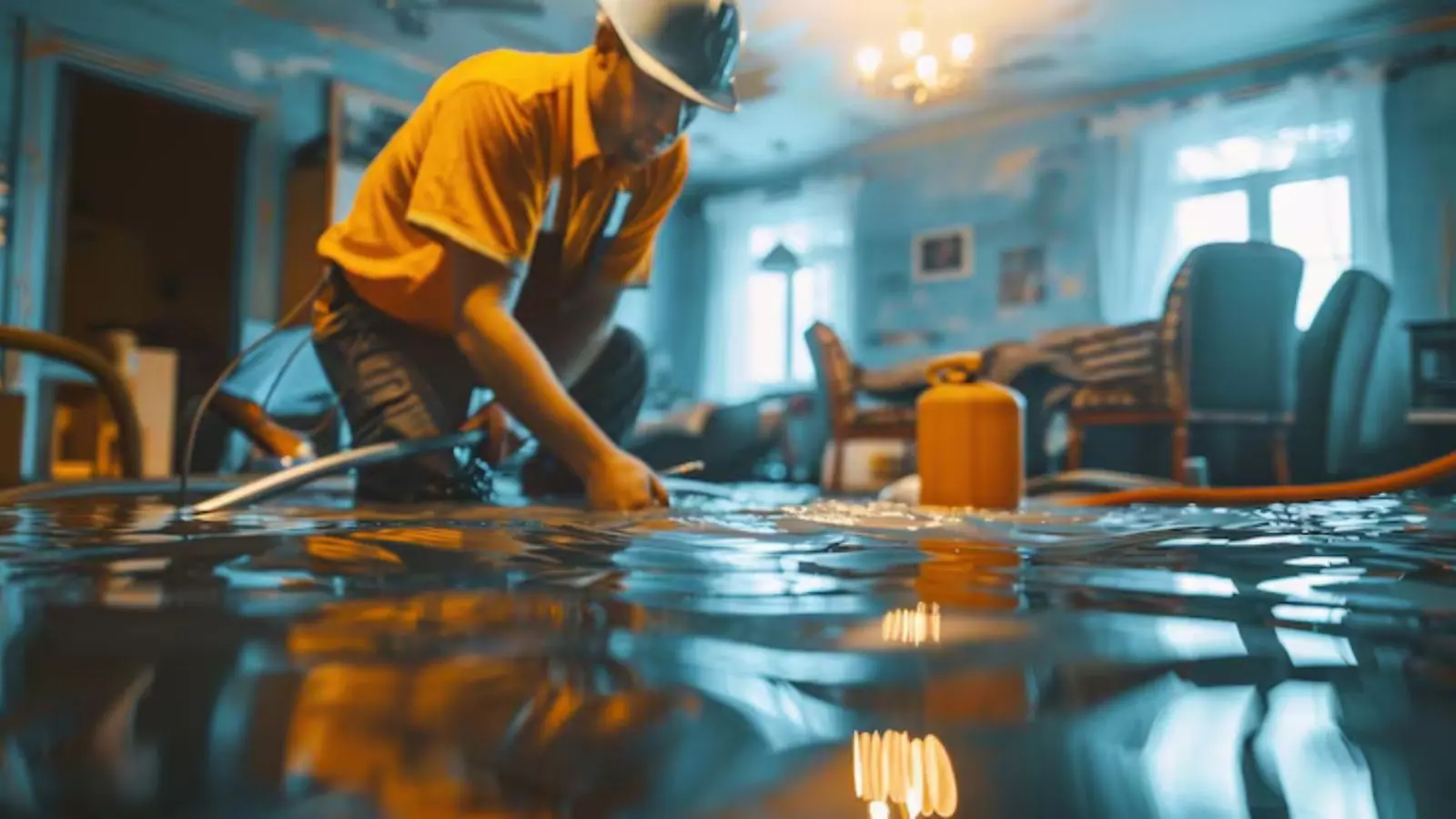
A soaked hallway or a flooded kitchen feels urgent because it is. Water damage cleanup is the work that begins once the source is stopped: removing standing water, wet debris and contaminated materials, then sanitizing and deodorizing what stays. Our dispatch line, (424) 550-5662, answers 24/7.
While you wait, shut off the main water valve, lift valuables onto dry surfaces and keep people and pets out of any dirty water. Switch off power to wet rooms only if the panel is reachable dry. Water at the outlets or the panel means the room is off limits until a professional has checked it.
When the water is stopped but the mess is not
Closing the valve feels like the end of the emergency, but the next 48 hours decide how much of the building survives. Drywall wicks water well above the visible line, carpet pad holds gallons like a sponge, and bacteria in dirty water multiply fast in warm, closed rooms. By day two, mold risk starts to climb on wet paper-faced board and framing.
Cleanup is the bridge between a stopped leak and the drying phase described on our water mitigation page. We pull out what cannot be saved, wash and treat what can, and leave a room the drying crew can work in. Skip the bridge and a dried house can still smell wet a month later.
Stay out if electricity or sewage is involved
If water touches an electrical panel, outlets or ceiling fixtures, stay out of the room. A dry, easy-to-reach panel is the only safe place to switch off wet circuits. If that is not your situation, the utility or 911 comes before any restoration phone call.
If the water came from a toilet, floor drain or sewer line, treat it as contaminated and keep everyone out. For sewage you think belongs to the city, LA Sanitation and Environment lists a hotline and the 311 line.
Water categories and what each one means for cleanup
ANSI/IICRC S500 is the published standard for water damage restoration, and it ranks water in three categories by contamination at the source. The category sets how aggressive the cleanup must be. Ask any company whether its crews work to S500.
| Category | Typical sources | What cleanup involves |
|---|---|---|
| 1, clean water | Broken supply line, failed faucet hose, ice-maker line, sink overflow with clean water | Extraction, removal of soaked pad and damaged board, then drying. Surfaces are cleaned and most hard materials stay. |
| 2, gray water | Dishwasher or washer discharge, toilet overflow with urine only, sump pump failure | Extraction, discarding of wet pad and porous items, cleaning and antimicrobial treatment of hard surfaces, then drying. |
| 3, black water | Sewage backup, rising floodwater, water from outside the building, long-standing category 2 water | Protective gear, removal of carpet, pad and wet drywall, cleaning and sanitizing of the structure, HEPA air filtration. |
Category 1 water can slip to category 2 within a day or two, which is why a slow response changes the scope. A pipe that bursts inside a wall is clean at the break and may be gray by the time anyone opens the cavity. When we cannot tell, we treat the water as the dirtier category and say so in the written scope.
What gets thrown out and what gets cleaned
The sorting rule is blunt: porous and hard to clean means discard, solid and washable means clean. Carpet pad is nearly always discarded, even after clean water, because it cannot be rinsed and dried reliably. Carpet itself may be kept after clean water but rarely after category 3.
| Material | After clean water | After gray or black water |
|---|---|---|
| Carpet pad | Usually discarded | Discarded |
| Carpet | Often extracted, cleaned and dried in place | Often discarded in category 2, discarded in category 3 |
| Drywall | Dried in place if wet only briefly, cut out if soft or swollen | Cut out at and above the water line with a margin |
| Fiberglass insulation | Dried, or replaced if compressed and sagging | Discarded |
| Hardwood and engineered flooring | Dried with mat systems if caught early | Often removed in category 3 |
| Tile, stone and sealed concrete | Cleaned and kept | Cleaned, sanitized and kept |
| Mattresses and upholstery | Dried and cleaned when possible | Usually discarded |
| Solid wood framing | Cleaned and dried | Cleaned, sanitized and dried |
Nothing leaves without a reason you can see. We photograph materials before removal, give you a written list, and ask before discarding anything with personal or sentimental value. That list also helps your insurer see what was lost.
How a cleanup job runs from first walkthrough to handoff
Assess
We walk the rooms with a moisture meter and a thermal imaging camera, identify the water category and mark the affected area.
Extract
Extraction units pull standing water from floors and carpet, starting where it is deepest so nothing else sits in it.
Remove debris and wet materials
Pad, damaged baseboard, swollen drywall and ruined insulation come out in bags. In category 3 areas the crew works in protective gear with the room sealed from the rest of the home.
Clean
Remaining surfaces and framing are scrubbed and rinsed to remove silt and residue, because antimicrobials work on clean surfaces and not on dirt.
Treat and deodorize
Antimicrobial goes on, then odor control, as described below.
Hand off to drying
Air movers and LGR dehumidifiers go in, and readings are logged daily until the structure is dry.
Antimicrobial treatment and odor control
An antimicrobial goes on after cleaning, not instead of it. We apply it to cleaned surfaces and exposed framing according to the product label, and the room stays unoccupied for the dwell time on that label. Category 1 jobs often need little of it, while category 2 and 3 jobs treat every exposed surface.
Odor control starts with finding the source. A smell that lingers after cleanup usually means something wet is still hidden, such as pad under a threshold, insulation behind a baseboard or board behind a cabinet kick. Moisture mapping finds it, we remove it, and HEPA air scrubbers run while the dehumidifiers work. Fragrance sprays only cover what is still wrong.
There is an honest limit here. Porous finishes that soaked up category 3 water can hold the smell for good, and replacing them is the only fix. We tell you which items fall in that group before work starts.
Contents and pack-out, in plain words
Pack-out means moving your belongings out of the work area so crews can reach floors and walls. It does not mean they vanish. We move items room by room, photograph them where they sit and number boxes against a written list.
Hard, non-porous items such as glassware, metal and plastic are cleaned and returned. Papers and photographs wet in clean water can sometimes be dried quickly, but anything soaked in category 3 water is usually lost. Wet electronics should stay unplugged until someone qualified checks them.
Contents are normally held in a dry room or a closed-off part of the same building until the rebuild. If your home has no spare space, we say so before work starts so you can plan around it.
Water stopped and the mess is still there?
Call (424) 550-5662 at any hour. The scope is written down and explained before any cleanup begins.
What comes after cleanup
Once surfaces are clean and the structure is dry, rebuilding begins. Water damage repair covers new drywall, insulation, flooring and paint, and it starts only after moisture readings show dry framing. If the water came from rain runoff or rising water outside, flood damage restoration covers the larger scale and category 3 conditions that come with it.
Harbor City details that shape the job
ZIP 90710 has 9,912 housing units on the Census Reporter ACS count, and in any shared building a leak in one unit often reaches the unit below. If that is you, tell the property manager in writing the same day and photograph both sides of the damage, because the answer to who handles it often depends on where the water started.
If the water came from the street side of your meter, the LADWP main break line is 1-800-DIAL-DWP (1-800-342-5397). Call it so the supply is shut off at the source. Our crews also work east of Harbor City in Carson, where the same sequence of extraction, cleaning and treatment applies.
Cost factors for cleanup
| Cost factor | How it changes the scope |
|---|---|
| Water category | Category 3 adds protective gear, sealed work areas and more removal than category 1. |
| Affected area | More square footage and more rooms mean more extraction time and more material hauled out. |
| Materials involved | Carpet and pad, drywall, insulation and hardwood each have a different clean-or-discard answer. |
| Time since the loss | Water that sat for days can move up a category and soak deeper into framing. |
| Drying days and equipment | Larger setups run longer and need more air movers and dehumidifiers. |
Insurance rules are general. A one-time failure is the kind of loss a homeowners policy commonly covers, long-term seepage often is not, and flooding generally needs its own coverage. Confirm with your insurer before assuming either way. Want your real number? Call (424) 550-5662.
Clean it yourself or call a crew?
| Situation | Reasonable to handle yourself | Call a crew |
|---|---|---|
| A cup or two of clean water on a hard floor | Yes, mop and dry within hours | Only if it keeps happening |
| Clean water soaked into carpet | A small patch, with a shop vacuum and fans | If the area is larger than a closet or has stayed wet over a day |
| Water inside a wall or under cabinets | Rarely, because hidden moisture needs meters | Yes |
| Toilet or sewer overflow | No | Yes, and keep out until the crew arrives |
| Wet or sagging ceiling | No, stay out of the room | Yes, once any electrical risk is cleared |
How we set scope and price
Callers usually ask for a number first, and that is fair. The honest answer is that a number needs readings. We start with an inspection or assessment: moisture readings on walls and floors, thermal images, photos, the affected area and the materials involved.
The scope is written down and explained before any cleanup begins. We offer a same-day response when the schedule allows, and we do not promise an arrival time.
Frequently asked questions
Do you handle water damage cleanup emergencies at night or on weekends in Harbor City?
Yes. Cleanup often starts the morning after a leak, but the line at (424) 550-5662 is open overnight and on weekends for anything that cannot wait. When it is available we offer a same-day response, and we never promise an arrival time. Mention any sewage smell or wet electrical equipment right away so the crew plan accounts for it.
My carpet is wet and smells musty. Is cleanup enough or does it have to come out?
It depends on the water category and how long the carpet stayed wet. Carpet that took clean water and was caught within a day or so can often be extracted, cleaned and dried in place, while the pad under it is usually replaced. Carpet wet with sewage or floodwater, or wet for days, generally goes.
How long does water damage cleanup take?
A single room with clean water is often cleaned out in a day, while sewage or multi-room jobs stretch to several days. Drying follows and typically takes several days more. Category, area and materials set the real timeline.
Do I need to move my furniture before the crew comes?
Do not strain yourself or wade through dirty water. Lift small valuables and papers onto dry surfaces if it is safe. Crews move the rest room by room and photograph it as they go.
How long should people and pets stay out after antimicrobial treatment?
Follow the dwell time printed on the product label, and we tell you when the room can be used again. Questions about health and exposure belong to your physician, not to a restoration crew.
Water from my upstairs neighbor soaked my Harbor City ceiling. Who handles cleanup?
Notify the property manager or landlord in writing and photograph the damage before anything is removed. Ask your insurer how a loss that started in another unit is handled under your policy. Cleanup should not wait on that conversation, because wet drywall and pad get worse quickly, and our written scope and photos give your insurer a clear record.