
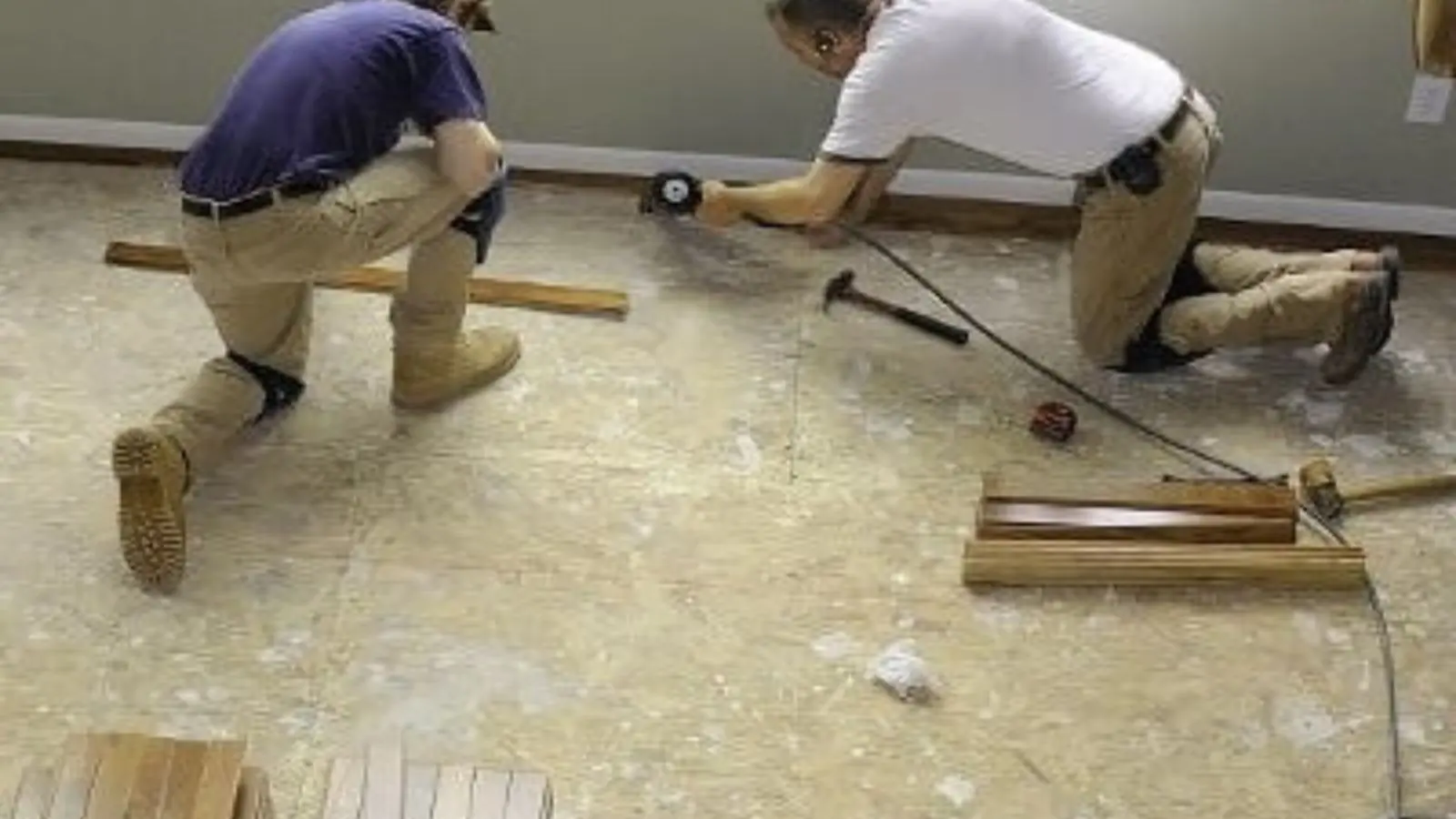
Water damage repair is the rebuilding stage that follows drying: new drywall, insulation, flooring, trim, paint and cabinet parts to replace what had to be cut out. It is a separate job from pulling water out of a building, with its own order of work.
Repair starts only after moisture readings show the structure is dry. Closing a wall over damp framing locks moisture in, and that is how warped boards and hidden mold get built into a finished room. If water is still present in your home, call (424) 550-5662 and ask about water mitigation first.
Why Harbor City repairs usually start with an ordinary leak
ZIP 90710 counts 9,912 housing units, and the leaks behind repair calls are mostly everyday ones: a failed supply line under a sink, a leaking water heater, an upstairs tub overflow, flashing that gave out in heavy rain. The count says nothing about the age of your own building, so ask your city building department what records exist for it before walls are opened.
If the water came from the street side of the meter, call LADWP at 1-800-DIAL-DWP (1-800-342-5397) so the supply is shut off at the source. We ask what failed and whether it has been fixed before we price a single sheet of drywall, because a rebuild paid for twice is the expensive way to learn the cause was never found. We rebuild across Harbor City and in Lomita, west of Harbor City, using the same sequence.
Signs the rebuild is due
Brown or yellow stains
Rings on ceilings and walls mean water moved through the board. The ring does not show how much of the board behind it is still wet.
Bubbling or peeling paint
Paint lifts when moisture pushes from behind. The paper face of the drywall under it is often soft.
Cupped or buckled flooring
Boards crown or lift at the seams after the underside absorbs water, and laminate swells at its edges.
Soft baseboards and cabinet bases
Particleboard swells and does not shrink back. Pressing a thumb into the toe-kick tells you quickly.
A sagging ceiling
Wet insulation and board carry real weight. Stay out from under it and keep the lights off if the fixture is wet.
A musty smell in a room that feels dry
Something behind a finished surface may still be damp. That calls for readings before any patching.
We confirm what is behind the surface with a moisture meter and a thermal imaging camera, which shows cool damp patches that the eye cannot see. Those readings, not the stain, decide how much comes out.
Repair starts when the readings say dry
Drying is finished when wet materials read close to unaffected material of the same kind in the same house. A meter reading on stained drywall is compared with a reading on a clean wall in another room, and framing is checked the same way. We log those numbers daily so the handoff to repair rests on records and not a guess.
The tear-out and sanitizing happen earlier, in water damage cleanup. By the time rebuilding starts, the debris is gone, surfaces are clean and dehumidifiers have done their work. If a reading is still high we say so and hold the schedule.
Confirm dry
Final readings on framing, subfloor and remaining board, recorded and photographed.
Insulate and close cavities
Dry insulation goes back in, and new board is screwed to dry studs or joists.
Tape, finish and sand
Joint compound in thin coats with sanding between, then a stain-blocking primer.
Match texture and paint
Texture is sprayed or hand applied, and paint runs corner to corner so the sheen stays even.
Flooring, trim and cabinets
Floors go down last, then baseboard, then cabinet parts and fixtures.
Ceiling and Wall Water Damage Repair
A brown ring on a ceiling or a bubble in a wall means water has soaked the board and often the insulation above or behind it. Painting over the stain hides the ring for a few weeks and then it bleeds back through. Repair starts by mapping how far the dampness goes with a moisture meter and a thermal imaging camera, then cutting back to dry, solid board.
We cut a clean rectangle out to the nearest studs or joists, replace wet insulation and fit new drywall of the same thickness. Seams get tape and joint compound in three thin coats with sanding between each, then a stain-blocking primer so the old marks stay hidden. A sagging ceiling is different: the whole sheet usually comes down, because wet board loses its grip on the screws.
Texture is where patches show. Orange peel and knockdown can be matched with a spray rig and a steady hand, while older popcorn texture is harder, and asking about an asbestos test before cutting is sensible for older ceilings. Paint is rolled corner to corner, not dabbed, so the sheen stays even across the whole wall or ceiling.
Hardwood floor cupping and drying
Cupping is when board edges rise above their centers because the underside absorbed more moisture than the top. It shows up days after a leak and keeps changing while the wood is wet. Sanding too early flattens the surface, then the boards relax as they dry and the floor crowns the other way.
We dry hardwood with mat systems that pull moisture through the boards, low-humidity air from LGR dehumidifiers and meter checks at the same spots each day. Many floors flatten partly on their own over several weeks. Boards that split, delaminate or stay cupped after drying are replaced, then the floor is sanded and finished as one surface.
When a roof leak brings the ceiling down
Picture a heavy rain and a failed roof flashing. Water runs along the rafters and collects in the insulation above a bedroom, and one night the board gives way, dropping wet insulation and drywall onto the floor and the bed. The room looks like a demolition site and it is also wet and electrically risky.
Stay out from under any ceiling that bulges or sags, because it can fail without warning. Switch off that room's circuit from a dry panel, or leave it alone and call an electrician if you cannot reach it safely. Photograph everything before it is moved. Then call a roofer to stop the entry, since no ceiling repair holds while the roof still leaks.
Our part is clearing the debris, drying the ceiling cavity and joists, and rebuilding insulation, board, texture and paint. Sudden storm damage is often covered by homeowners policies while a roof worn out by age often is not, so confirm with your insurer before work begins.
Repair or replace: how the call gets made
| Material | Repair when | Replace when |
|---|---|---|
| Drywall | The board is dry, firm and flat, with only a stain on it | It is soft, swollen, sagging or was wet with category 3 water |
| Insulation | It is dry and still fluffy | It is compressed, dirty or was wet inside a closed cavity |
| Carpet and pad | Carpet after clean water, with new pad underneath | Carpet after category 3 water, and pad almost always |
| Laminate and vinyl plank | Rarely, when edges are flat and nothing got under the planks | Edges swell, seams lift or water sits underneath |
| Hardwood | Mild cupping that settles once the boards are dry | Boards split, delaminate or stay cupped after drying |
| Cabinets | Solid wood and plywood boxes after drying | Particleboard bases that swelled |
Permits and picking a contractor
Ask LADBS whether your repair needs a permit. The Los Angeles Department of Building and Safety, at dbs.lacity.gov, takes permit filings online, with one portal for simple projects and another for projects that need plans. Patching painted drywall is a different matter from moving a pipe, and the department, not a contractor's guess, is the one to say which is which.
Plumbing permits there cover drainage, waste and vent, gas and potable water piping, so ask before a leak repair touches those. The LADBS San Pedro office is at 638 S. Beacon St, San Pedro 90731, and San Pedro lies south of Harbor City.
The Contractors State License Board says any contractor doing work of $500 or more in combined labor and materials must be licensed. We are licensed and insured. Keep the deposit small, since CSLB advises no more than 10 percent or $1,000, whichever is less, unless the contractor holds a blanket performance and payment bond, and confirm your contractor will obtain permits.
Cost factors for repair
| Cost factor | How it changes the scope |
|---|---|
| Amount removed | More square feet of board, flooring or insulation means more material, labor and finishing. |
| Materials chosen | Hardwood, solid-wood cabinets and plain carpet each need different crews and lead times. |
| Finish matching | Texture, paint and floor sanding that must blend with existing surfaces add steps. |
| Drying status | Readings that stay high hold the schedule until the structure is dry. |
| Access and complexity | High ceilings, stairs, tight cabinet runs and plumbing in the wall change the labor. |
Insurance rules are general, and repair scope is where policy wording matters most: a covered sudden loss may fund the rebuild while a gradual leak may not, and flood damage usually needs separate flood coverage. Check your policy, ask your insurer, and keep our written scope and photos for the claim file. Want your real number? Call (424) 550-5662.
Ready to talk about the rebuild?
Call (424) 550-5662 and we will lay out what the rebuild involves before anything is opened up.
How a repair estimate is built
Most callers want the quote first. We build it from moisture readings, photos, the affected area and the materials involved, which means someone has to look at the damage. An inspection or assessment is how that begins, and we offer a same-day response when the schedule allows without promising an arrival time.
If mold shows up when a wall is opened, work on that area stops and the plan changes. Mold remediation follows its own containment steps before any new board goes up.
Frequently asked questions
A brown stain appeared on my ceiling after rain. What should I do first?
Look for sagging, and if the ceiling bulges, stay out from under it. Photograph the stain, put a bucket under any drip, and have the roof checked, because repairs fail while the leak continues. Then call us for readings to see how far the water spread.
Can I just paint over a water stain?
Paint hides a dry stain only if the board is firm and truly dry. A stain-blocking primer helps, but if the material behind is still damp or soft, the ring returns and the board keeps degrading. Readings tell you which case you have.
How soon after the leak can repairs begin?
Repair starts only after moisture readings show the structure is dry. Drying typically takes several days, and thick hardwood or framing can take longer. We state those as typical ranges, not promises.
Do I need a permit for water damage repair in Harbor City?
Raise the permit question early. We do not guess at permit rules for you.
My hardwood floor cupped after a leak. Do I have to replace it?
Not always. Boards often flatten partly over several weeks once drying is complete, and a sand and refinish fixes mild cupping. Boards that split, delaminate or stay cupped are replaced.
What happens if mold is found when you open the wall?
We stop in that area, document it and explain the options. Mold needs its own containment and removal steps, covered on our mold remediation page, and rebuilding resumes after that work is done.