
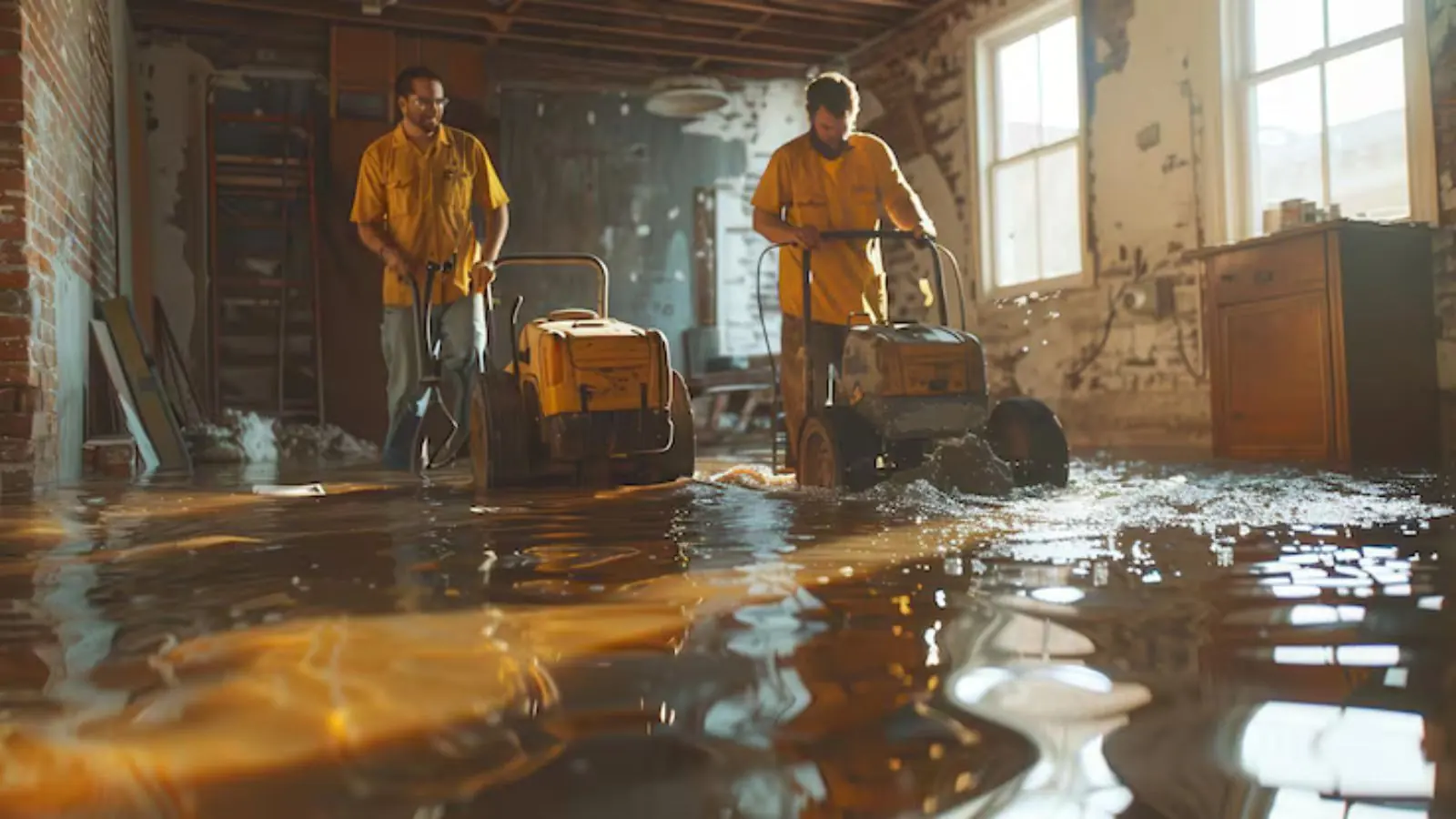
Emergency water removal means getting standing water out of a building with pumps and extraction units before it sinks into what lies underneath. Harbor City callers can reach us on the 24/7 dispatch line at (424) 550-5662.
Until we reach you, close the main water valve or the stop valve under the fixture, carry electronics and valuables to dry shelves, and keep children and pets away from water that came from a drain or toilet. Switch off power to the wet area only if you can reach the panel without wading. We arrange a same-day response when one is available and never promise an arrival time.
When standing water is an emergency
Half an inch of water across a 1,000 square foot floor is roughly 300 gallons, and it does not stay on top of the floor. Within minutes it runs into carpet pad, under baseboards and into the bottom of the drywall. Treat water as an emergency if it is still flowing, still rising, touching an outlet or coming up from a drain.
Stop the flow
Close the main valve, or the stop valve under the sink, toilet or water heater. A line you cannot shut off is worth a mention on the phone.
Lift what the water has not reached
Move shoes, cords, books and small furniture onto counters and beds. Put foil or blocks under furniture legs on wet carpet so finishes do not stain.
Check the panel before you step in
Water at your feet with an outlet in reach is a reason to wait. Switch off wet circuits only from dry ground, and otherwise call the utility or 911 first.
Photograph, then call
Take wide shots and close shots of the water line and the source before moving anything. Then ring the 24/7 line and describe what you see.
A floor that looks nearly dry can still be hiding a problem. These signs mean the water is still working against you.
Squishy carpet underfoot
A squelch means the pad is full. The pad is the layer that holds water the longest.
A hiss or trickle inside a wall
Sound with every fixture off points to a pressurized leak. Close the main and listen again.
A water meter that keeps moving
Turn every fixture off and look at the meter. A dial still turning means water is escaping somewhere.
Wet baseboards in more than one room
Water has found a path under the walls. The affected area is larger than it looks.
Pumps, wet vacs and extraction units: what gets used when
The right tool depends on the depth of the water and what it is sitting on. A pump is fast but leaves a film, and a wand pass on carpet is thorough but slow.
| Situation | Equipment usually used | Trade-off |
|---|---|---|
| Water over an inch deep across a room | Submersible pump with a hose run to a suitable discharge point | Fast bulk removal, though a thin film stays behind |
| Soaked wall-to-wall carpet | Extraction unit with a weighted wand, worked in slow passes | Pulls surface water, yet the pad underneath often cannot be saved |
| Hard floors and thin water | Wet vacuum or extractor | Quick on tile and sealed concrete, less effective between wood planks |
| Water under hardwood or laminate | Mat or injectidry systems after bulk removal | Reaches the cavity, and the floor may still cup |
| Crawl space with standing water | Pump at the lowest point with extension hoses | Access is tight, and insulation above may be wet |
Extraction removes liquid water. It does not pull out the moisture already inside materials, so water mitigation follows with air movers and LGR dehumidifiers. We pick the discharge point on site and avoid sending hoses anywhere that creates a new problem.
Call the 24/7 line and tell us the depth and the source. We start the plan while you stay on the phone.
Burst Pipe Water Damage
A burst supply line can run at several gallons a minute until a valve is closed, so the first job is the valve, not the mop. After that, four steps keep the loss small:
- Close the main water valve, then open the lowest faucet to drain the lines.
- Photograph the break, the water line on the walls and any damaged belongings.
- Keep the failed section of pipe or fitting if you can, since your plumber and your insurer may both want to see it.
- Call a plumber for the pipe and call us for the water.
Restoration and plumbing are separate trades. We remove the water and dry the structure, and a plumber replaces the failed pipe. LADBS lists potable water piping among the work covered by its plumbing permits, so ask LADBS whether your repipe needs a permit.
A burst pipe is an internal source of water. Sudden and accidental losses like this are often covered by homeowners policies, but check your policy, because flood coverage is separate and excludes water from pipes inside the home.
Crawl spaces and whole-house flooding
When water covers a whole floor or fills a crawl space, the job stops being a spill and becomes a pump-out. We check the access panels and the underside of the floor first, because water can sit under a house where nobody sees it. Large losses take several passes, from bulk pump-out to extraction to drying, and soaked underfloor insulation often has to come out because it holds water against the subfloor.
Ceilings that bulge, sag or drip
Stay out from under it
A ceiling that bulges, sags or shows a spreading brown stain is holding water, and wet drywall can drop with little warning. Keep people and pets out of the room, and do not stand beneath it to poke or press it.
Cut power to that room only if the panel is reachable dry. Sparks, buzzing or a gas smell mean you leave and phone the utility or 911 first.
We release trapped water in a controlled way from a safe position, then dry the cavity above. A ceiling that has already sagged is usually replaced instead of patched, because wet drywall loses its strength.
Harbor City details for water removal calls
If the water is coming up from the street or the meter box is overflowing, call LADWP's main break line at 1-800-DIAL-DWP (1-800-342-5397). A pump inside a house cannot outrun a broken main outside it. Call them first, then call us for what has already come inside.
Lomita sits just west of Harbor City and uses ZIP 90717. If your address is over the line, the same dispatch applies, so give us that ZIP when you call, and the Lomita water damage page explains what to expect there.
Water that arrived from outside after a storm is a different case, handled on our flood damage restoration page. The contamination level is usually higher and the cleanup list is longer.
What changes the scope of emergency water removal
| Cost factor | How it changes the scope |
|---|---|
| Depth and volume of water | A flooded room takes more pump time and more extraction passes than a spill. |
| Water category | Clean supply water is handled differently from drain or storm water, and contaminated water means more removal of porous materials. |
| Access and hose runs | Crawl spaces, stairs and long hose runs add time and equipment. |
| Flooring and materials | Carpet and pad, hardwood, laminate and tile respond differently to extraction. |
| Follow-up drying | Extraction is followed by air movers and dehumidifiers, and that run adds days. |
Insurers often cover sudden and accidental water damage but may not cover gradual leaks, so check your policy or ask your insurer. We keep dated photos and notes the claim file can use. Want your real number? Call (424) 550-5662.
Scope and price on an active emergency
Most callers ask what this will cost before anything else. We explain scope and price before work starts, and on an active emergency that conversation happens on the phone while we line up a crew.
The final scope comes from an inspection: water depth, affected area, materials and moisture readings. If the numbers change once floors are lifted, we say so before the extra work begins.
After the water is out
Pumping ends the flooding, not the damage. Soaked rugs, furniture and clothing are sorted under water damage cleanup, and the building itself goes into drying under the mitigation plan.
Keep your photos, the receipts for anything you buy to cope, and notes on when you first saw the water. Those make the claim conversation with your insurer easier.
Frequently asked questions
Do you handle emergency water removal emergencies at night or on weekends in Harbor City?
Yes, standing water is exactly the kind of call the night line exists for. Dial (424) 550-5662 on any evening, weekend or holiday and a dispatcher picks up. We do not quote an arrival time, but we do work toward a same-day crew. It helps to know the address, where the water is entering and roughly how deep it is.
Why does the house still smell damp after the standing water is gone?
Extraction removes liquid water but not the moisture soaked into carpet pad, drywall and framing. That leftover moisture is what you smell. Drying equipment and moisture readings are what finish the job.
Should I shut off the electricity before the crew arrives?
Only if the panel is in a dry spot you can reach without stepping in water. Water near outlets, the panel or a ceiling light fixture means that room is off limits until the utility or 911 has assessed the risk.
Is a burst pipe covered by insurance?
Sudden and accidental pipe failures are often covered, while slow leaks and neglect often are not. Water from a pipe inside your home counts as an internal source, which differs from outside flooding handled under separate coverage, described on our flood damage restoration page. Check your policy or ask your insurer.
Is the job finished once the pump is turned off?
No. The pump-out is the first stage. Wet materials still need air movers, LGR dehumidifiers and moisture checks, which is the work described under water mitigation.
I live near the Lomita line. Can I call you for a flooded kitchen?
Yes, call the same dispatch number. Tell us you are in Lomita or Harbor City and give the ZIP, either 90717 or 90710. A burst dishwasher line or water heater leak gets the same pump and extraction plan.