
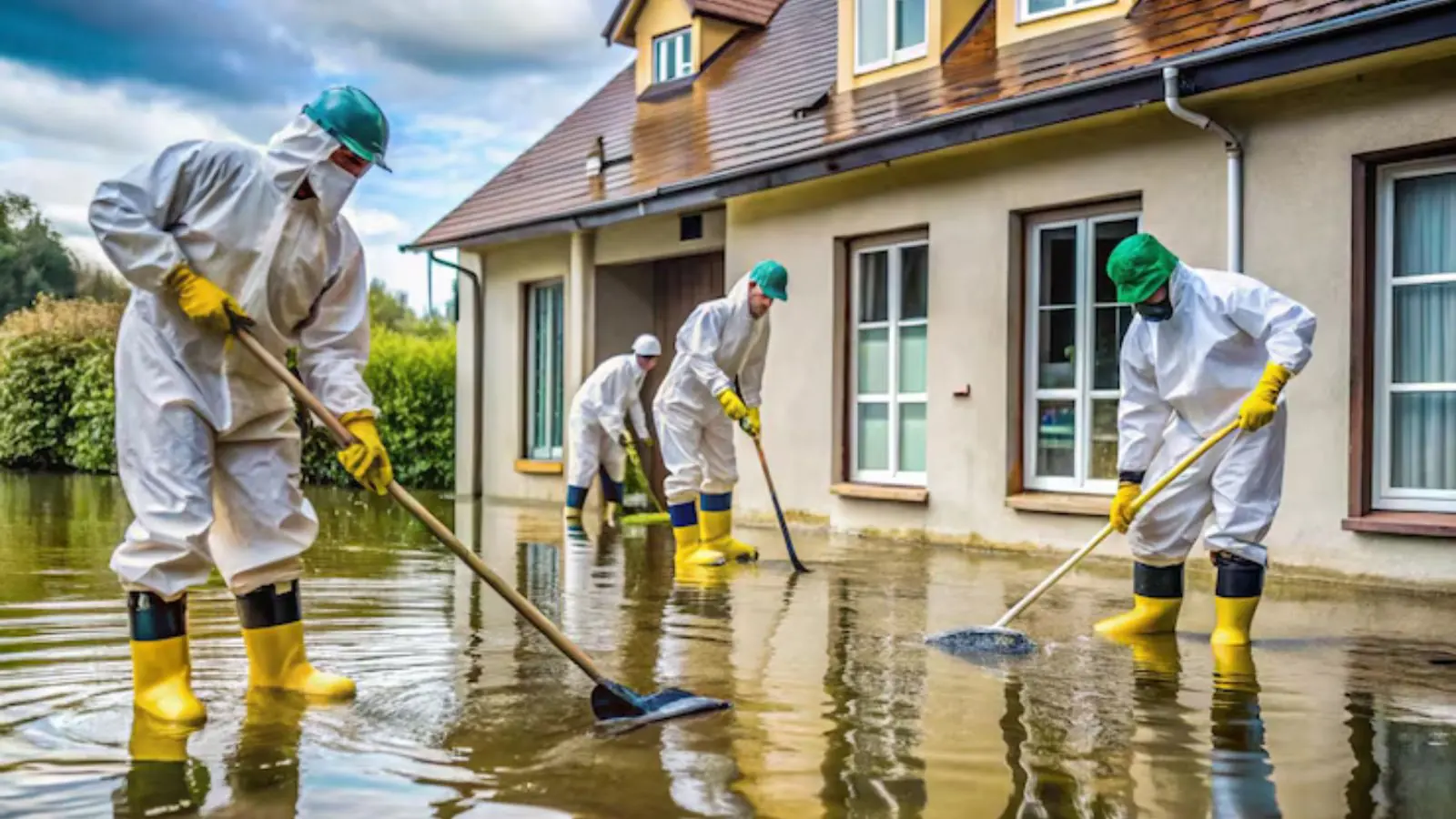
Flood damage restoration removes storm, river or groundwater from a building, takes out materials that cannot be cleaned, and then disinfects and dries what remains. Rising water from outside and sewage are treated as Category 3 under ANSI/IICRC S500, so contamination is the assumption until proven otherwise. Our Harbor City line runs 24/7 at (424) 550-5662.
Stay out of the water if you can. Keep children and pets away, take photos from the dry edge, and move valuables to higher ground. Touch the breaker panel only if the floor in front of it is dry. Flooded basements often hide the panel, so when in doubt stay upstairs and phone the utility or 911.
When flooding is an emergency
Flooding is an emergency when water is entering the home, when it is deeper than the baseboards, or when a drain is pushing sewage up into a tub, shower or floor. Each hour that porous materials sit in contaminated water makes salvage less likely.
Three situations account for most flood calls: storm water at a door or garage, groundwater seeping up through a slab or basement wall, and a sewer line that has stopped carrying waste away. Each one calls for a different first move, and the section headings below take them in turn.
Before anything else
Do not walk through floodwater with any appliance, cord or outlet nearby. Do not run a household vacuum on it. Wear rubber boots and gloves if you must cross it, and wash with soap afterward.
Water categories and what gets kept
Category decides almost everything about a flood job. Ask any restoration company whether its crews work to ANSI/IICRC S500, the published standard that defines these categories.
| Category | Typical source | What usually happens to porous materials |
|---|---|---|
| Category 1 | Supply line break, overflowing sink with clean water | Often dried in place if caught early |
| Category 2 | Washing machine discharge, dishwasher overflow, some sump pump water | Carpet pad and wet drywall are commonly removed, and hard surfaces are cleaned |
| Category 3 | Sewage, rising river or storm flooding, groundwater | Carpet, pad, drywall and insulation that touched it are removed, and structure is disinfected before drying |
Water also slides up the scale as it sits. Clean water left in a wall for several days can pick up contamination and be treated as a higher category.
Four questions decide whether an item stays or goes. Work through them for each material, room by room:
- What category was the water when it arrived?
- How long did the material stay wet?
- Is the material porous, such as pad or drywall, or sealed, such as tile and concrete?
- Can it be cleaned and dried to a measured standard, or only to a visual one?
Storm drains, Machado Lake and your address
Ken Malloy Harbor Regional Park, on South Normandie Avenue, covers about 290 acres including the 45-acre Machado Lake, managed by LA Sanitation. Its rehabilitation project includes treatment systems at major storm drain inlets and dam rehabilitation at the lake's south end, so stormwater from surrounding streets is a designed part of how the park works.
That does not tell you whether your own street floods. For a real answer, check the FEMA flood map for your address, ask your city building department what applies to your property, and photograph any water line you find after a storm so you have a record.
Basement Flooding Cleanup
If your home has a basement, lower level or below-grade room, water usually arrives by seepage through the slab and walls, through window wells, or from a storm drain backing up. A sump pump that has failed makes it worse. Note the outlet too, because a pump discharging against a blocked line cannot keep up.
We pump down in stages, not all at once, because draining a flooded space too fast can stress walls and floors that the surrounding soil is still pushing against. After that, wet drywall is cut back past the wick line, carpet and pad come out, and concrete is cleaned and disinfected.
Dehumidifiers and air movers then run until readings fall, and a HEPA air scrubber is added when odor or dust control matters. Stored boxes are the quiet loss: cardboard on a wet slab absorbs water fast, so lift it first. Photograph the water line on the walls before cleanup, since that mark shows how deep the water stood and how far the drywall must be cut.
Sewage Backup Cleanup
Raw sewage coming up a drain? Treat it as Category 3 from the first minute.
Safety first
Stay out of the affected rooms, keep skin and food away from the water, and cut power only if the panel is reachable dry. A gas smell or a buzzing wet outlet belongs to the utility or 911, not to a restoration crew. LA Sanitation and Environment lists 1-800-773-CITY (2489) and the 311 line.
A plumber or the responsible utility must clear the blockage, or the backup returns. Our crews then remove porous materials the sewage touched, including carpet, pad, drywall and insulation, and clean and disinfect hard surfaces. Items are bagged and carried out in a way that keeps sewage off clean rooms.
Upholstered furniture that sat in sewage is rarely worth saving, while hard furniture and sealed items can often be cleaned. Water that sat long enough to wick up a wall means drywall removal above the visible line. A HEPA air scrubber and dehumidifiers run until the space is dry and the odor is gone.
Does insurance cover flood damage?
According to the California Department of Insurance, standard homeowners policies do not cover flood. A separate flood policy through the NFIP normally takes effect 30 days after purchase, so it has to be in place before a storm and not after. That wait is why cover bought after the water arrives is too late.
The same guide says flood insurance excludes water from sources inside the home, such as burst pipes, and does not usually cover moisture, mildew or mold damage that could have been avoided. So the source of the water decides which policy you open. Report storm damage promptly, take photos, and keep records of cleanup and repair costs.
The NFIP claims line is 1-800-638-6620, and the CDI help line is 800-927-4357. Check your policy or ask your insurer which one applies to your loss.
What changes the scope of flood cleanup
| Cost factor | How it changes the scope |
|---|---|
| Water category | Category 3 means removal and disinfection of porous materials before any drying begins. |
| Depth and duration | Deeper water that sat longer reaches higher on walls and deeper into subfloors. |
| Affected area | Number of rooms, a basement versus a ground floor, and the height of the water line. |
| Materials involved | Carpet, pad, drywall, insulation, hardwood and stored contents each go keep-or-remove on their own terms. |
| Drying days and rebuild | Equipment run time and the repair scope that follows. |
Flood damage is usually excluded from standard homeowners coverage, so separate flood coverage matters here. We keep dated photos and moisture logs for your insurer's review. Want your real number? Call (424) 550-5662.
Call the 24/7 line. Describe the source, the depth and what has been touched, and we will tell you what to do while we arrange a response.
How a flood estimate starts
Callers want a number first. A flood quote depends on the water category, the area and the materials, so it starts with an inspection where we take moisture readings, photograph the water line and note what was touched.
We explain scope and price before work starts. Same-day response is arranged when a crew is available, and we do not promise an arrival time.
After the flood
Wet structures grow mold if they stay wet, so drying speed matters. If growth already shows, mold remediation follows ANSI/IICRC S520 practice, and health questions belong with a physician.
Contents that survived need washing, disinfecting or disposal, which is where water damage cleanup comes in. For a pipe failure inside the home with no outside water, emergency water removal is the better starting page.
Torrance sits west to northwest of Harbor City, covers 20.52 square miles and uses ZIPs 90501 to 90506. Give us your ZIP when you call, and see water damage help in Torrance for what to expect there.
Frequently asked questions
Do you handle flood damage restoration emergencies at night or on weekends in Harbor City?
Yes. Storms and sewer backups do not keep office hours, so the flood line is answered at all hours, including Sundays and holidays. The dispatcher will ask about the water source, the depth and any sewage smell, then explain what to do while a crew is lined up. Same-day response is offered when available and arrival times are never promised.
Water is seeping up through my floor after rain. What should I do?
Stay off wet floors near outlets, move valuables up, and photograph the water line. Seepage through a slab is groundwater, which is treated as contaminated, so do not mop it by hand. Call the line and we will explain the next step.
Is a sewage backup the same as flood damage?
For cleanup, both are Category 3 and need the same safety care. For insurance they can differ, because a backed-up drain is not the same as rising outside water. Read your policy or ask your insurer how each is treated.
Can you waterproof my basement so it does not flood again?
No. Restoration cleans up and dries after water gets in, and waterproofing is a different trade. For drains, grading, wall sealing or a sump system, ask a waterproofing or drainage contractor and confirm their license with the Contractors State License Board. A plumber handles failed pipes.
How soon after a flood can mold become a concern?
Mold needs moisture, so a flooded room that stays wet beyond the first day or two starts to carry more risk. We make no health claims. If growth already shows, see mold remediation, and take health questions to a physician.
Is the area near Ken Malloy Harbor Regional Park in a flood zone?
We cannot say for any address. The FEMA flood map is the place to start for your own address. The park's storm drain inlet treatment systems show stormwater moves through that area, but only the map and your policy can tell you your risk.