
Water restoration in plain language
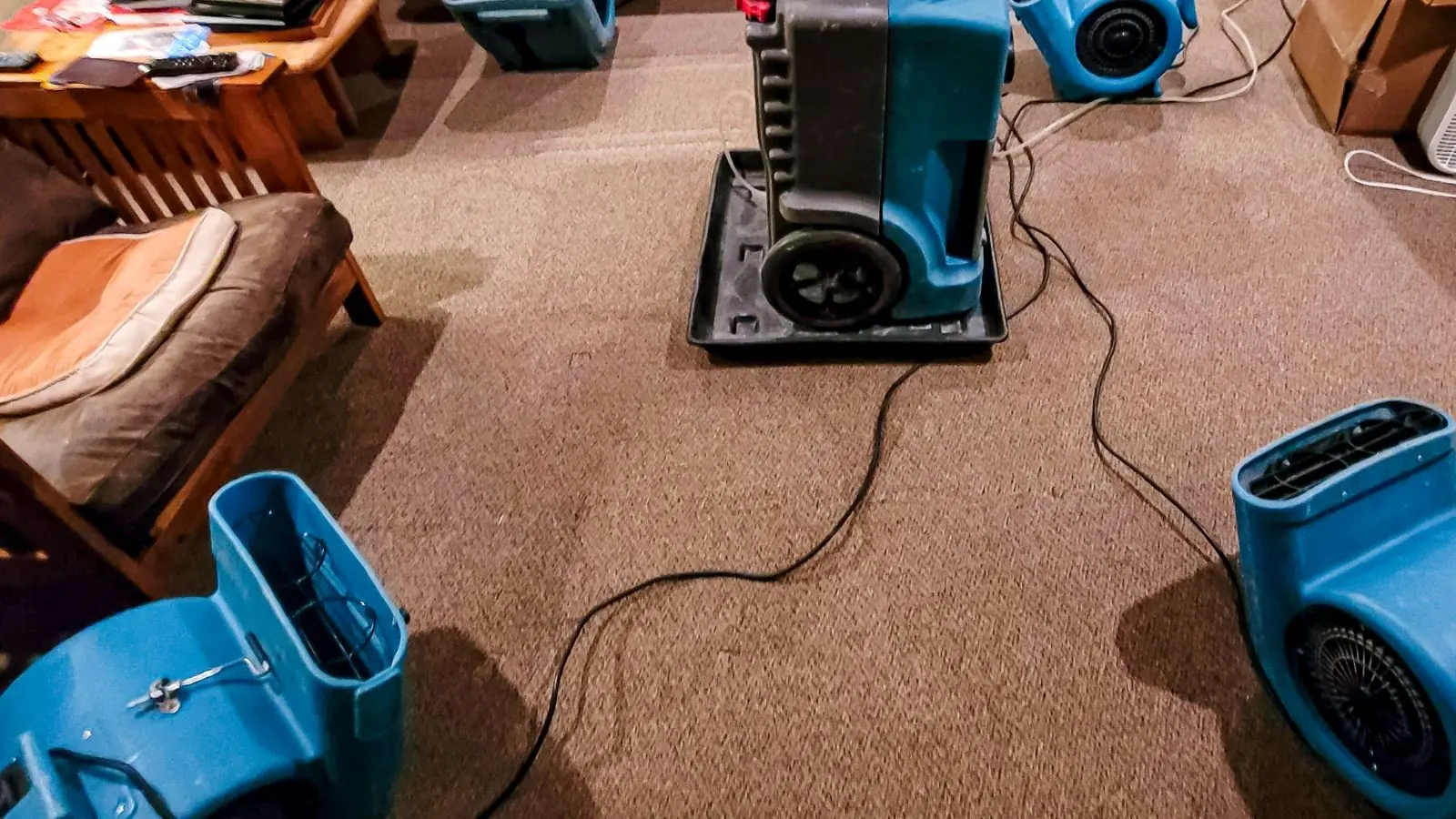
Water restoration is the process of returning a building to its condition before the loss. It begins while water is still spreading and ends when the rooms are dry, clean and rebuilt. Most homeowners only notice the loud middle part, the rows of fans humming in the hallway, but the job reaches well past that.
Think of it as one project with five phases that overlap. A supply line splits at two in the morning, and by sunrise a crew has stopped the spread, pulled out standing water and started drying. The painter shows up days or weeks later, after a meter confirms the framing is dry.
The five phases and the tools each one uses
The table follows the order jobs usually run. Real work shuffles it a little, since a technician may start cutting out soaked carpet pad while the extractor is still running in the next room.
| Phase | What happens | Typical equipment |
|---|---|---|
| Emergency response | The source is stopped, hazards are checked, the water category is assessed and damage is photographed | Moisture meters, thermal imaging camera, protective gear, camera |
| Extraction | Standing water is removed and saturated carpet or pad is lifted | Truck-mounted or portable extractors, submersible pumps, extraction wands |
| Drying | Wet materials are dried to target readings, with checks every day | Air movers, LGR dehumidifiers, floor mat or injection drying systems, meters |
| Cleaning | Affected surfaces and contents are cleaned, and treated where the category calls for it | HEPA vacuums, air scrubbers, cleaning agents, containment sheeting |
| Repair | Removed drywall, insulation, flooring, trim and paint are replaced | Drywall and carpentry tools, texture sprayers, flooring tools, paint supplies |
Repair comes last for a reason. Closing up a wall over damp framing is the quickest way to earn a second visit, so a careful crew holds the rebuild until readings say the structure is ready.
The water category shapes every phase. Category 1 comes from a clean source such as a supply line, Category 2 carries some contamination, and Category 3 is grossly contaminated, as with sewage or river water. A higher category means more material gets removed instead of dried, which changes both the schedule and the scope.
How restoration differs from mitigation, cleanup and repair
These four words get used as if they were synonyms, and that muddles a lot of estimates. Mitigation is the early work that keeps damage from growing, which our water mitigation service covers in detail. Restoration is the larger umbrella: it contains mitigation, then carries on through drying to completion, cleaning and rebuilding.
Cleanup is narrower. It means removing water, debris and contaminated material and sanitizing what stays, as laid out on the cleanup page. Repair is the construction side, with new drywall, flooring and paint, handled through water damage repair. A company can be strong at one and thin on another, so ask which phases a quote actually covers.
Who does what on a job
A restoration project usually involves more hands than people expect. The roles below are typical, though a small job may fold two of them into one person.
- The project lead sets the drying plan, reads the meters and decides when the structure has reached its goal.
- Technicians extract water, place and move equipment, and record readings on each visit.
- Repair carpenters and painters rebuild what was removed, often under a separate scope.
- The homeowner approves the scope, moves valuables out of the way and tells the crew about anything unusual, such as a past leak in the same wall.
- Your insurer, if you file a claim, decides coverage under your policy. Ask what documentation it wants before work begins.
Call (424) 550-5662 and our dispatch line answers 24/7. Each phase is explained up front, so you know what the work involves.
What a written scope should list
A scope of work keeps everyone honest. We explain scope and price in writing before work starts, and you should expect the same from anyone you hire. A one-line quote reading 'water damage cleanup' tells you almost nothing.
- The water category (1, 2 or 3) and how it was decided
- Each affected room with the approximate area
- Materials to be removed, such as carpet pad, baseboard, lower drywall or insulation
- Equipment to be placed, by type and count, plus the expected number of drying days
- How moisture readings will be recorded and shared with you
- Which repair items are included and which belong to a separate contract
- What documentation you can hand to your insurer
Ask about the published standard
ANSI/IICRC S500 is the published industry standard for professional water damage restoration. Ask any company whether its crews work to it, then ask what that means on your job, such as how they choose dehumidifier placement or decide when drying can stop.
How you know a restoration is finished
Dry is a measured state, not a feeling. A drying phase is done when readings on structural materials return to the range of an unaffected spot in the same house, which usually takes several days of running equipment. If someone pulls the fans because the air feels fine, ask to see the numbers.
Cost follows the same logic. It depends on the water category, the affected area, the materials involved, the number of drying days and the rebuild scope. A clean-water supply line failure that reaches one bedroom is a very different project from a Category 3 backup that soaked drywall and insulation.
Harbor City details worth knowing
Census Reporter's ACS figures for ZIP 90710 count 9,912 housing units and 26,761 residents. With that many homes, no two floor plans or damage patterns match, so ask for a scope written around your rooms instead of a stock form.
Harbor City is part of the City of Los Angeles, while Lomita and Torrance are separate cities next door. That matters at the rebuild stage, because the building department you ask about permits depends on which city your address belongs to.
Sources: Census Reporter (ACS), Wikipedia, City of Los Angeles, LADBS
Frequently asked questions
Is water restoration the same as water damage repair?
No. Repair is the final phase, the rebuilding of drywall, flooring and finishes. Restoration includes it but starts much earlier, with stopping the water, extraction and drying.
How long does restoration take?
Drying typically runs several days, and the rebuild adds more time depending on which materials were removed. Large losses and Category 3 water take longer, since more material has to come out.
Does restoration include mold work?
Not automatically. Mold work is its own scope, and it follows ANSI/IICRC S520 practice when a company uses the published standard. If you suspect growth, see our mold remediation service page.
Who do I ask about permits for rebuilding in Harbor City?
Harbor City sits inside the City of Los Angeles, so permit questions go to LADBS. Homes in Lomita or Torrance answer to those cities' building departments instead.