
Sudden or gradual: the line insurers draw
Most California homeowners policies respond to sudden and accidental water damage, such as a pipe that bursts overnight or a water heater that fails on a Sunday. They often exclude damage that built up slowly, like a drip behind a wall that ran for months, or damage tied to neglect and poor maintenance. Wording differs from policy to policy, so read yours or ask your insurer directly.
Renters sit on a different track. A renters policy usually protects your belongings, while the building belongs to the landlord's coverage. Tell the landlord in writing the day you find the leak, and keep a copy of that message.
Flood is a separate product
The California Department of Insurance states that standard homeowners insurance does not cover flood. Flood protection comes from a separate policy, often through the National Flood Insurance Program. NFIP policies normally take effect 30 days after purchase, with an exception for a high-risk area when a federally regulated mortgage requires the coverage.
That 30 day wait is the reason a policy bought as storm clouds arrive will not help. The CDI flood guide adds two more points to know: flood coverage does not usually pay for moisture, mildew or mold damage that could have been avoided, and it excludes water that comes from sources inside the home, such as burst pipes. Fast drying protects you under both kinds of policy.
What is commonly covered, and what to check
| Type of loss | Commonly covered? | What to check |
|---|---|---|
| Burst pipe or failed supply line | Often, when sudden and accidental | Date and cause, which valve you shut off, any plumber's report |
| Appliance overflow or hose failure | Often, when sudden | Age and upkeep of the unit, any sublimit for appliance losses |
| Slow leak over weeks or months | Often not covered | Policy language on seepage and continuous leakage, and when you first noticed it |
| Storm damage to the roof | Depends on the policy and roof condition | Whether the opening was storm created, plus any wear exclusions |
| Rising water or flooding from outside | Usually excluded from homeowners policies | Separate flood coverage through NFIP or a private insurer |
| Sewer or drain backup | Often needs an added endorsement | A water backup endorsement on the policy and its limit |
| Mold after a leak | Depends on the cause and policy limits | Whether the original loss was covered and how soon drying began |
Build the record while the water is still there
- Take wide photos of each room, then close shots of the source, the waterline and every damaged item. Include something that shows scale, like a tape measure.
- Record a slow video walkthrough and narrate the date, time and what you see.
- Write down when you discovered the water, what you did, and who you called. A phone note works.
- List damaged contents with brand, age and approximate value, and keep receipts when you have them.
- Save every receipt for emergency repairs, hotel nights and equipment. The CDI advises keeping records of cleanup and repair costs.
When your insurer asks you to keep damaged materials, keep them. That might be a section of the failed pipe, a swatch of wet carpet or a cut piece of drywall, stored in a bag in the garage. Do not discard the evidence until the adjuster has had the chance to see it or told you in writing that you may.
Call us at any hour. We hand you the paperwork to pass along, and the scope is explained first.
What we provide, and what we do not
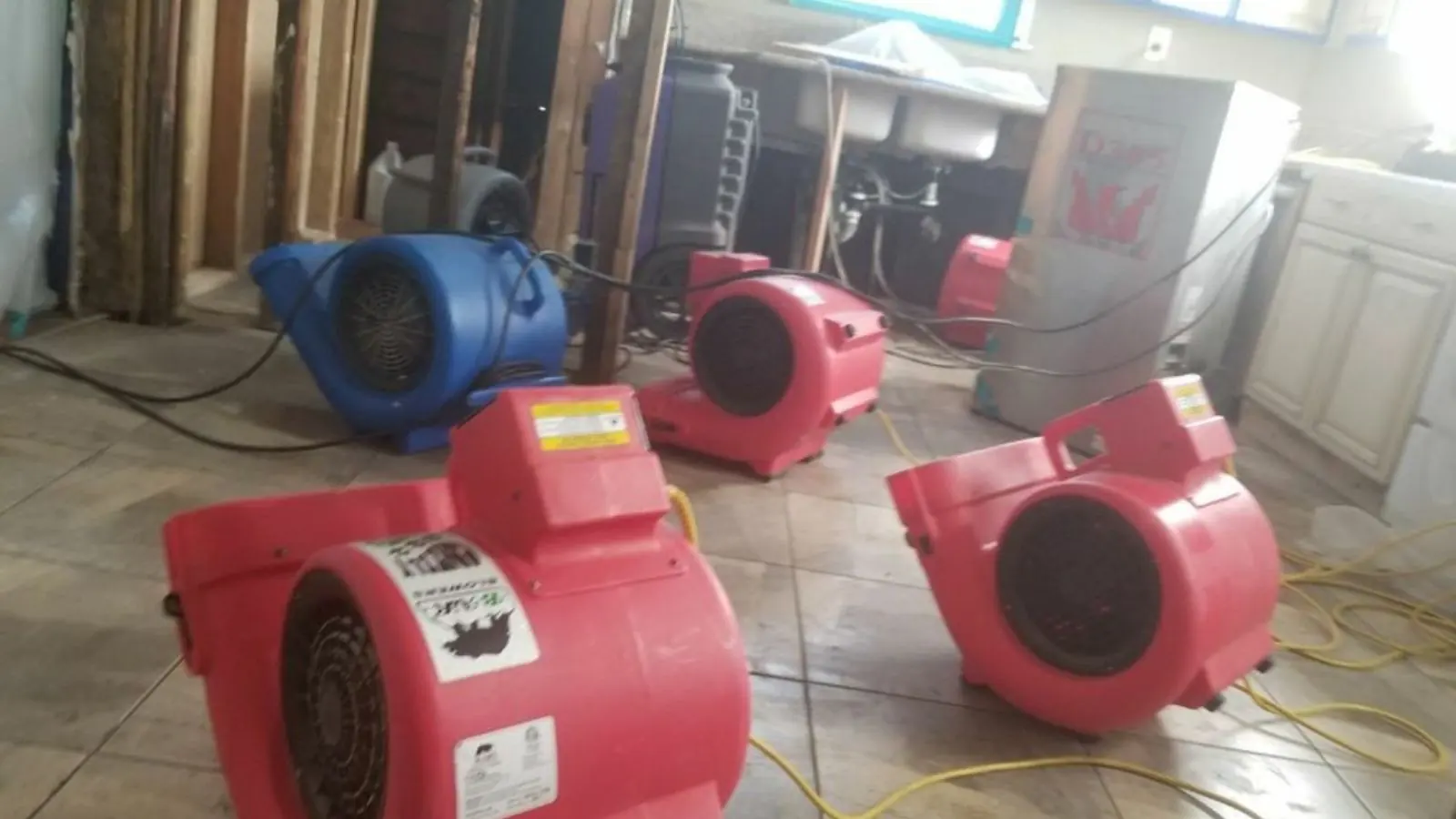
For every job we write up a scope of work, record daily moisture readings, take dated photos and list the equipment we set. That package shows what was wet, what was removed and when the structure reached a dry reading. Our water damage cleanup crews build it as the work goes, not afterward from memory.
Here is what we do not do. We do not approve or deny claims, we do not bill your insurer directly, and we make no promises about what a policy will pay. Your carrier makes those decisions, and you stay in charge of the conversation with them.
Many policies expect you to take reasonable steps to stop further damage, which is why water mitigation should not wait for an adjuster's visit. Photograph first, tell your insurer you are starting emergency drying, and then start. Ask your insurer if you are unsure what your policy requires.
Report quickly and keep talking
Call your insurer or agent soon after the loss and get a claim number. Write down the name of everyone you speak to, the date and what was said. If a form comes by email, answer it by email too, so the trail is in writing.
Ask what the insurer wants to see before demolition begins, since wet drywall and carpet often have to come out within days. Properties in nearby Wilmington and Torrance follow the same California rules, so these steps apply there too.
California rules that apply in Harbor City
The California Department of Insurance advises residents to report storm damage promptly, take photos and keep records of cleanup and repair costs. That is the same habit this guide describes, and it matters for any home in ZIP 90710, flooded or not. The CDI help line is 800-927-4357.
For flood policies, the NFIP claims line is 1-800-638-6620. Remember that a new flood policy normally starts 30 days after purchase, so check your coverage before the rainy season and not during it.
Sources: California Department of Insurance consumer guidance, National Flood Insurance Program
Frequently asked questions
Will my insurer pay for emergency water removal?
That depends on your policy and on whether the loss was sudden and accidental. We cannot approve a claim or predict what will be paid. Ask your insurer before you start, and keep every receipt either way.
Do I have to use a company my insurer picks?
Policies differ, so ask your insurer what yours requires. In most cases you can ask about choosing your own contractor, but check the wording in your policy and get any instruction in writing.
What if I already threw away wet carpet?
Tell your insurer and send whatever photos you took before it went. Describe the carpet and pad, the room size and the date. Do not discard anything else until you have asked.
Can you bill my insurance company directly?
No. We do not direct bill. You pay us, and we give you the scope, moisture logs and photos to submit to your insurer for your own claim. See our water mitigation page for what the drying records show.
A water main break outside my Harbor City home flooded my yard. Who do I call?
Start with the LADWP water main break line. Photograph the water, the date and any damage, and ask LADWP how it handles reports about its own lines. Your homeowners policy may respond differently, so ask your insurer as well.