
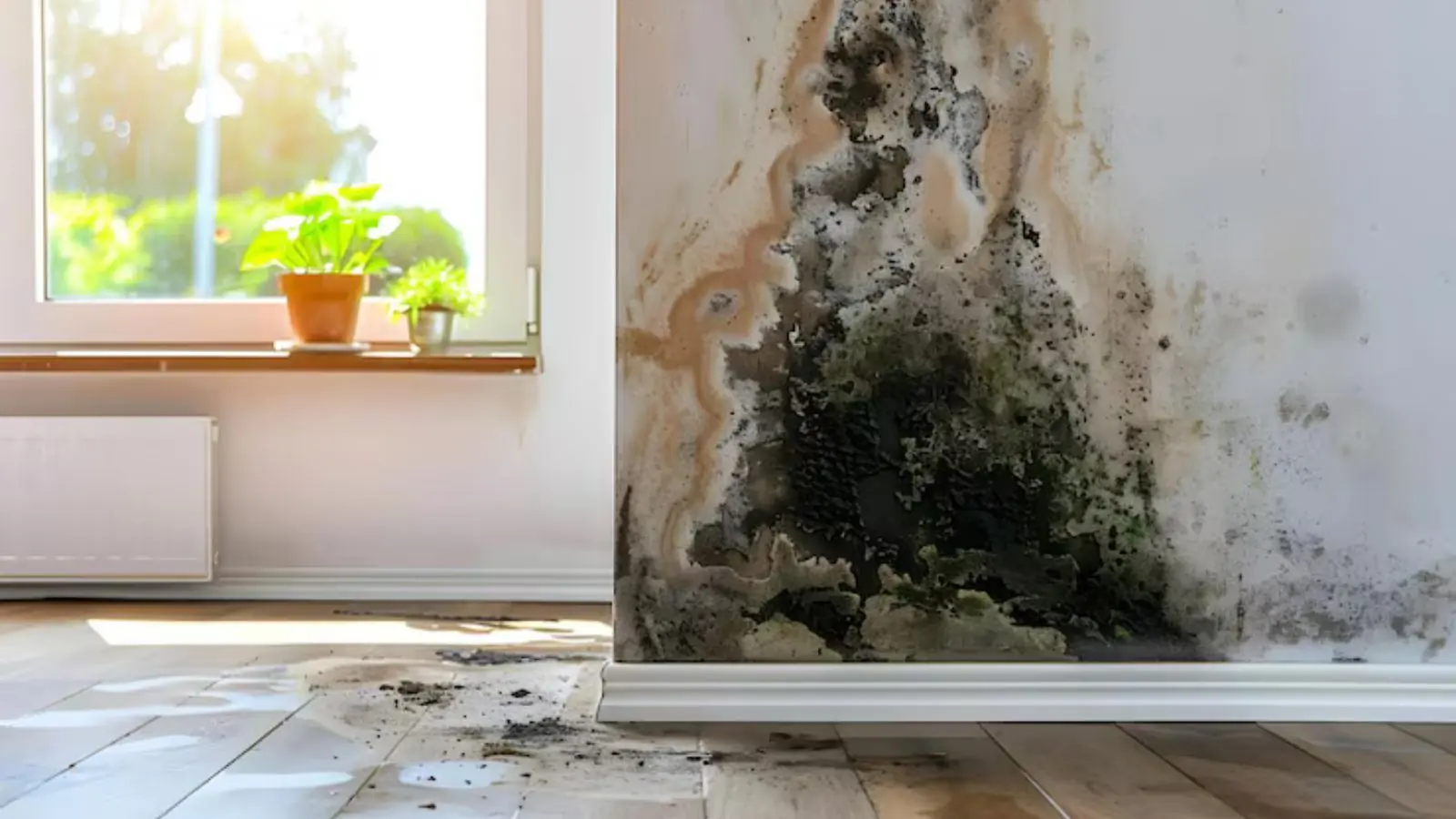
A stain is a record of a wet event
A water stain is what water leaves behind when it moves through a material and dries. Tannins, rust, dirt and minerals travel with the moisture and settle at the edge, which is why many stains show a darker ring. The mark tells you water was there. It does not tell you whether water is still there.
Mold growth is a different thing. It is a living colony, and it needs moisture, a food source such as paper-faced drywall or dust, and time. That is why the two so often turn up together on the same wall: the water supplies the first condition and the building supplies the rest.
Four checks you can do at home
None of these checks diagnose anything, and none replace a trained inspection. They simply narrow down what you are looking at before you decide who to call.
Look at the pattern
Stains from a single wetting tend to be flat, with a fairly crisp edge and a tan or brown color. Growth tends to look spotty, fuzzy or speckled, and may appear in clusters of green, black, gray or white. Shine a flashlight across the surface at a low angle, since texture shows up better in raking light.
Notice the smell
A stale, earthy odor with no visible mark often points to moisture trapped somewhere you cannot see, such as the back of a cabinet or the cavity behind a tub. Odor is a clue to dampness, not proof of growth.
Watch whether it spreads
Mark the edge of the patch in pencil and check it again after a week and after the next shower or rain. A boundary that creeps outward suggests an active moisture source.
Take a moisture reading
A pin or pinless moisture meter gives a number you can compare against a dry wall in the same room. Reading the stained area and a spot a few feet away shows whether the stain is dry or still holding water. A meter is the single most useful tool in this whole process.
Reading the signs side by side
| Sign | More likely | What to do |
|---|---|---|
| Flat tan or brown ring with a defined edge, meter reads dry | Old water stain | Confirm the source is fixed, seal with a stain-blocking primer, then repaint and watch for changes |
| Fuzzy, speckled or clustered patches in green, black, gray or white | Mold growth | Do not scrub or sand it dry. Stop the moisture and ask for an assessment that follows S520 practice |
| Musty odor and no visible mark | Hidden moisture, cause unknown | Check under sinks, behind furniture and around tubs, then take meter readings along nearby walls |
| Patch grows after rain or showers | Active leak with either condition possible | Treat it as a live water problem and trace the source before anything cosmetic |
| Bubbling paint over soft or crumbly drywall | Water damage, possible growth behind it | Have a professional open a small inspection area and read the cavity |
| Stain unchanged for months and meter reads dry | Dried stain from a past event | Prime and repaint, then recheck the reading after the next heavy rain |
Why a dried stain still matters
A stain that has dried can still be a warning. The paper facing on drywall holds moisture longer than the gypsum core, and insulation or framing above the mark may stay damp after the surface feels dry. Typically, the window before growth becomes more likely runs 24 to 48 hours after a wetting, so a stain of unknown age deserves a meter reading.
Paint also hides history. A fresh coat over an old ring will look clean for a season, then the ring bleeds through. Without a stain-blocking primer and a fixed source, you end up repainting the same spot over and over.
Call (424) 550-5662 and describe what you see. Our dispatch line answers 24/7 and can walk you through next steps.
What testing can and cannot tell you
Air and surface sampling can show which types of spores are present at the moment of collection and roughly how that compares with an outdoor sample. It cannot tell you how long the growth has been there or what caused it. Health questions belong to a physician, not a lab report.
Results also depend on where and when the sample was taken. A single swab from the wrong spot can miss a colony that a meter reading in the next room would have flagged. Sampling plans for remediation projects follow ANSI/IICRC S520, and it is fair to ask any company how its plan would apply to your home.
Fix the water first, then deal with the growth
Cleaning a patch while the leak continues is like bailing a boat with the plug out. Mold needs moisture, so the first job is finding and stopping the source, whether that is a dripping trap, a failed shower pan or a roof flashing. Our water mitigation work covers the drying that follows a leak, and in the same visit we can tell you whether structural readings are normal.
Restoration and remediation connect at that handoff. Drying returns the materials to normal moisture, and if growth is already present, a separate scope under our mold remediation service removes or cleans affected material while containing the area. Crews in nearby Wilmington and Harbor City follow the same order: water, then growth, then rebuild.
Harbor City details worth knowing
Water arriving from the street side of the meter is a utility matter, and LADWP lists a main break line for it. If a damp wall or soggy ground seems to trace back to the street side of your property, call that number or ask your water utility which side of the meter the leak belongs to before you pay for interior work.
Census Reporter counts 9,912 housing units in ZIP 90710. In a neighborhood that size, a recurring stain at your address may just as easily come from an upstairs neighbor's plumbing as your own, so photograph it and ask your building manager early.
Sources: LADWP, Census Reporter (ACS)
Frequently asked questions
Can I tell mold from a stain by color alone?
No. Both can range from tan to black, and color overlaps. Pattern, smell, spread and a moisture reading tell you more than shade does.
Should I scrub the spot with bleach?
We would not start there. Scrubbing can spread material, and cleaning the surface does nothing about the moisture behind it. Find the source first, then ask a professional how the surface should be handled.
Do I need testing before remediation?
Not always. Visible growth with a known moisture source may not need sampling to justify a scope. Testing helps when the source is unclear or someone needs documentation, and S520 practice guides how it is done.
Can I ask my insurer about a stain I found later?
Ask your insurer and check your policy. Dated photos matter because insurers often separate a one-time leak from a slow one.
Who do I call in Harbor City if the moisture seems to come from the street side?
Call LADWP at 1-800-DIAL-DWP for a water main concern, or ask your water utility which side of the meter is yours. Once the water is stopped, call us for the drying.