
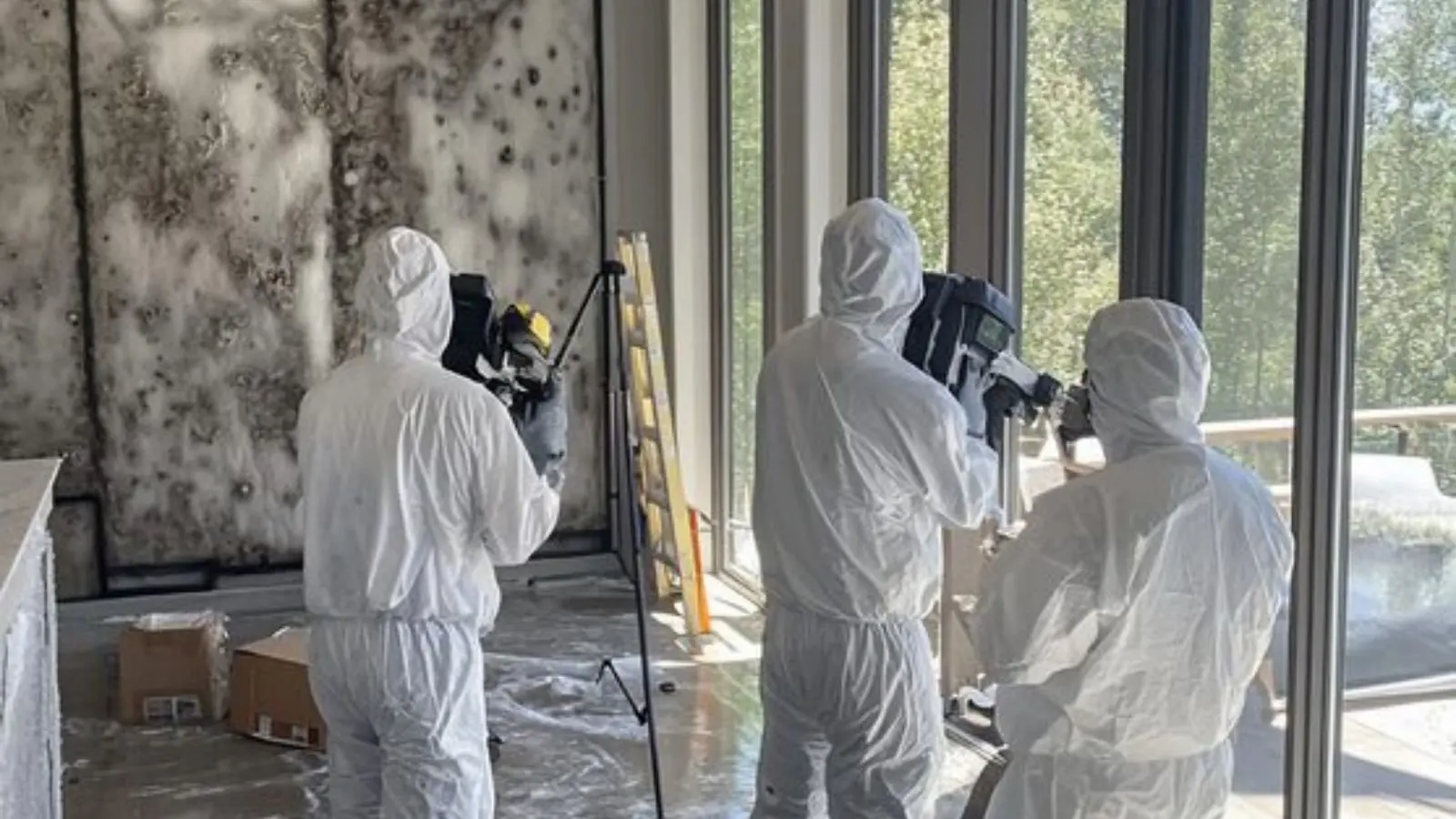
What a good job looks like
Mold remediation is more than spraying a product on a wall. The published industry standard, ANSI/IICRC S520, describes a process: assess the conditions, find the moisture, contain the affected area, remove contaminated material, clean, dry and verify. A company that works to that standard can walk you through each step in plain language.
You are allowed to ask any company whether its crews follow S520. A confident answer names the steps. A vague one tells you something too.
Mold needs moisture, so the cleanup is only half of the job. If a leak, a damp crawl space or a failed vent keeps feeding the area, the growth has a reason to return. Our mold remediation work begins with that question, not with a spray bottle.
The questions to ask, and what the answers should sound like
| Question | A good answer | A warning sign |
|---|---|---|
| Do your crews work to S520 practice? | Yes, and they explain the sequence from assessment to verification. | Silence, or a claim that no standard applies. |
| Will I get a written scope before work starts? | Yes. Rooms, materials, methods and price are itemized. | A verbal quote or a one-line total. |
| How do you contain the work area? | Plastic barriers, sealed openings, and controlled entry. | Doors left open, fans blowing through the house. |
| Do you use negative air? | Yes, with filtered air machines exhausting the work zone. | No answer, or a household fan. |
| Who fixes the moisture source? | They identify it and say who repairs it, and in what order. | Cleanup only, with no mention of the cause. |
| Can a separate party do clearance testing? | Yes, an independent tester is welcome. | Resistance to outside testing. |
| How is waste handled and removed? | Sealed bags, wiped down, carried out directly. | Open debris dragged through clean rooms. |
Print this table or copy it to your phone. Ask each company the same questions and write down what you hear. The differences usually show up fast.
Containment, negative air and disposal in plain terms
Containment is a sealed enclosure, usually polyethylene sheeting taped around the work area, with a controlled way in and out. It keeps disturbed spores from drifting into bedrooms and hallways. Without it, demolition can move the problem to rooms that were fine.
Negative air means a HEPA-filtered air machine pulls air out of the contained space, so the pressure inside stays lower than outside. Air leaks inward through small gaps instead of outward.
Disposal matters just as much. Removed drywall, insulation or carpet should be bagged inside the containment, wiped, and carried out by a direct route. If you see crew members hauling loose debris across your living room, ask why.
Testing and clearance
Testing helps when the question is whether an area is clean after the work. A good company will not object to an independent party doing that clearance, and many homeowners prefer it because the tester has no stake in the invoice. Ask the company to explain what the clearance criteria are before work starts.
Testing cannot answer health questions. Those go to your physician. If someone in the household has symptoms they connect to the home, that is a conversation for a doctor, not a contractor.
Red flags that should end the call
- No written scope, only a verbal number.
- A large deposit demanded before any work or materials appear.
- Promises such as "guaranteed forever" or "it will never come back." Mold needs moisture, and no company controls your plumbing or weather.
- Pressure to sign today, with a discount that vanishes tomorrow.
- A quote that arrives without anyone looking at the affected area.
- No answer about who is fixing the water source.
Call (424) 550-5662. We explain scope and price before work starts, and you are welcome to line ours up beside any other quote.
What the visit and the paperwork should look like
A trustworthy company looks at the problem before it quotes. Someone should check the affected area, take moisture readings, and ask when the water event happened and what has been done since. A price that arrives by text message from a photo is a guess, and guesses tend to grow once demolition starts.
The written scope should list rooms, materials to be removed, methods, equipment, disposal, and what happens afterward. It should also state what is not included, such as repainting or replacing flooring, so no line item surprises you at the end.
Ask for the scope a day before you decide. A company that wants your signature on the spot is selling urgency, and a company that gives you time to compare is selling work.
Water first, then mold
Many mold jobs begin as a wet building that nobody dried quickly enough. If water entered your home recently, water mitigation with proper drying equipment can stop the problem before it spreads. Past roughly 24 to 48 hours, the risk of growth rises.
If you are comparing companies from outside Harbor City, the same questions work for homes in Torrance and anywhere else.
Harbor City details worth knowing: licensing and paperwork
California's Contractors State License Board says any contractor doing work worth $500 or more, labor and materials combined, must be licensed. Do not pay more than 10 percent down or $1,000, whichever is less. An exception exists for contractors holding a blanket performance and payment bond. Ask the contractor to confirm in writing that permits will be obtained.
The CSLB site does not list a dedicated water damage or mold classification, so verify the license and ask whether your state licenses mold work. Ask LADBS whether your project needs a permit.
Sources: Contractors State License Board, Los Angeles Department of Building and Safety
Frequently asked questions
Should the company that removes the mold also test it?
Many homeowners prefer that a separate party handle clearance testing, since it keeps the cleanup and the verdict apart. A good company will welcome that arrangement.
How much deposit is reasonable?
The same pamphlet explains the exception for contractors who carry a blanket performance and payment bond. Treat bigger demands as a reason to pause.
Does homeowners insurance pay for mold removal?
It depends on the cause. Mold coverage varies widely between policies and often turns on the cause of the moisture. Read your policy and ask your insurer, and keep records and photos for them.
Does the lowest quote mean the best deal?
Not necessarily. A low number from a company that skips containment or leaves the moisture source alone is not comparable to a higher one that includes them. Read what each written scope includes and what it leaves out.
Which Harbor City document should I ask a mold contractor about?
Ask whether the work needs a permit from LADBS, and ask the contractor to say in writing who will pull it. Our mold remediation team is happy to answer that for your address.