
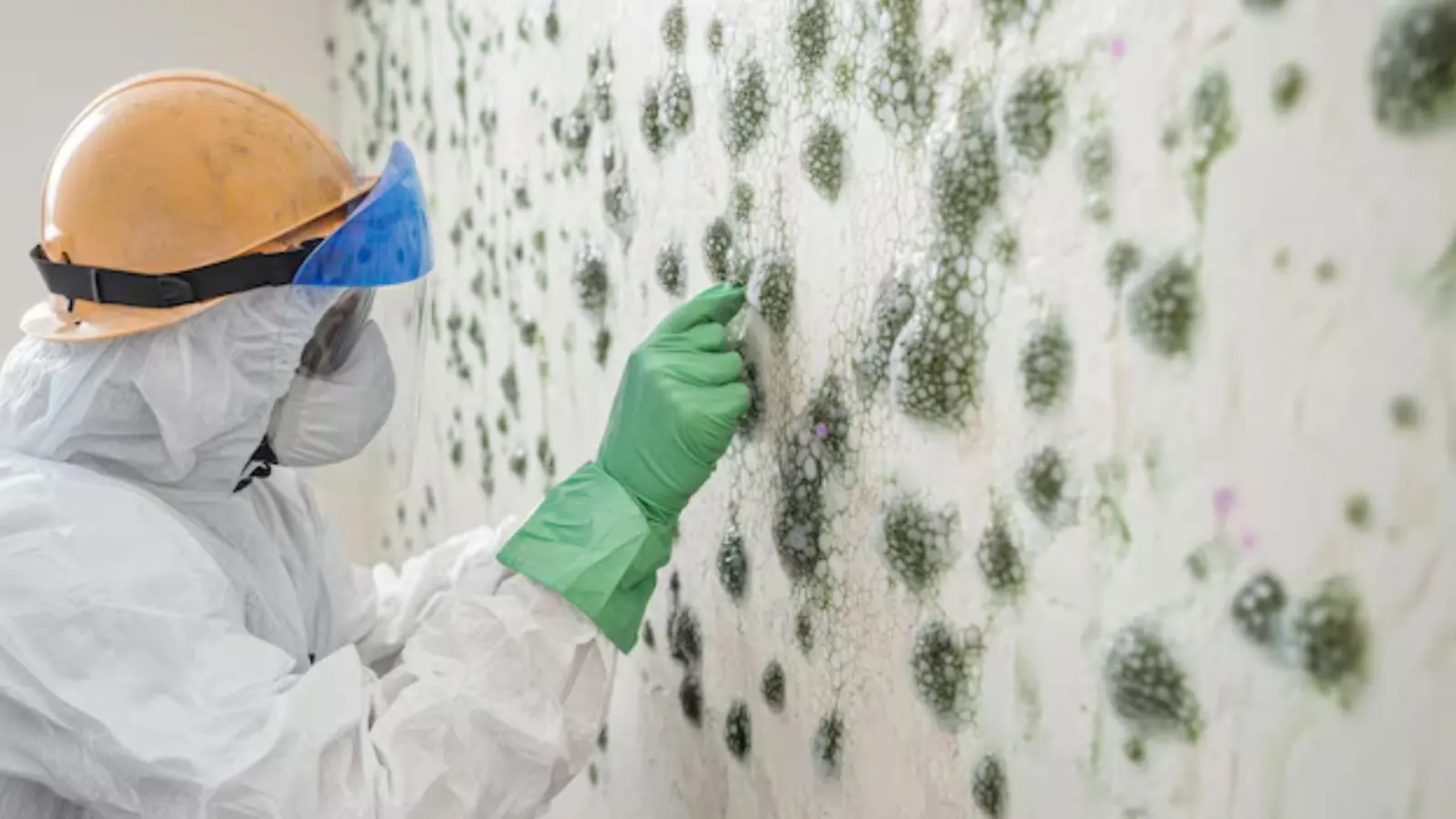
Mold needs a wet place to settle
Mold spores drift through the air of almost every building. What they lack is a reason to settle, and that reason is moisture that stays put. Remove the water quickly and the spores stay dormant, but leave a porous surface damp for a couple of days and they get what they need.
So the useful question is never whether mold is possible. It is where the water came from and whether it has really stopped. Four sources cover most of the homes we are called to:
- Plumbing leaks: a weeping supply line under a sink, a toilet connector, or a washing machine hose that seeps behind the wall for weeks.
- Condensation: cold pipes, uninsulated ducts and bathrooms with a dead exhaust fan sweat onto framing and ceilings every single day.
- AC drain lines: the condensate line clogs with algae, the pan fills, and water spills into a closet, attic or the ceiling below.
- Roof and window leaks: a lifted shingle or failed flashing sends water down the inside of a wall where nobody sees it.
Notice that three of the four are slow. A slow leak rarely gets noticed until a stain, a smell or bubbling paint shows up, and by then the damp has been working on the wall for a while.
The 24 to 48 hour window
Industry references, including the ANSI/IICRC S500 standard for water damage restoration, treat the first 24 to 48 hours as the point where mold risk starts to climb on wet porous materials. That is a typical range, not a stopwatch. Warm, still, humid air shortens it, while cool dry air with good movement stretches it.
A supply line leak caught on day one and dried properly rarely turns into a mold job. The same leak found on day nine behind a vanity usually comes with stained drywall paper, damp cabinet backs and a smell. Time spent wet matters more than the amount of water.
A box fan is not a drying plan
A fan moves air across a surface but does not pull moisture out of the room. Without a dehumidifier the vapor simply lands on the next cool surface. Open windows help only when the outdoor air is drier than the air inside.
Materials that grow mold first
Paper and wood fibers are food. The paper facing on drywall is often the first thing to go, followed by ceiling tile, cardboard boxes in a garage, fiberboard cabinet backs and the pad under carpet.
Dense materials hold out longer. Glass, metal, glazed tile and most hard plastics can usually be cleaned and dried. Insulation batts, particleboard and soaked carpet pad are normally discarded, because they dry slowly and cannot be cleaned well.
Check the hidden side of things. The underside of a sink cabinet, the inch behind a pulled baseboard, and the closet wall that backs onto a bathroom are where a moisture meter tends to find what your eyes cannot.
Call (424) 550-5662 at any hour. We take moisture readings, explain what we find, and give you a written scope.
What to do in week one
Stop the source
Shut the supply valve, clear the drain line or tarp the roof opening. Drying a room with an active leak is wasted effort.
Photograph before you touch
Take wide and close shots with the date visible. You will want them for an insurer and for any contractor who looks at the room.
Remove water and wet soft goods
Wet vacuum the puddles, lift area rugs, pull cardboard and books off the floor, and move furniture away from damp walls.
Dry with dehumidification
Run a dehumidifier aimed at roughly 50 percent relative humidity and push air along the wall with a fan. Check the damp spot each day.
Watch for warning signs
A musty smell, a new stain, bubbling paint, or a patch that still feels cool after three or four days means water is still in the wall or floor.
Hold off on paint and caulk
Primer over a wet wall hides the problem and traps the moisture. Wait until readings match an unaffected wall of the same material.
When to call a professional
Bring in a crew when wet material has stayed damp past two days, when growth covers more than a small patch, or when the water came from a toilet, drain or storm backup. Those jobs need containment, negative air and removal of porous materials, which is the work described in ANSI/IICRC S520 for mold remediation. Ask any company you call whether its crews follow S500 and S520.
The order matters. The moisture gets fixed and dried first through water mitigation, then affected material is removed and the structure cleaned. Our mold remediation service covers the second half of that sequence.
If someone offers a test, ask who reads the results and what the next step would be. A lab number is not a health verdict, and health questions belong with your physician. We take calls from Harbor City, Torrance and San Pedro, and renters should tell the property manager in writing the same day.
Shared walls and sewage in Harbor City
ZIP 90710 counts 9,912 housing units in Census Reporter's ACS figures. In any attached building a leak in one unit often wets a neighbor's wall, so report it to your landlord or HOA the day you find it, and ask them to check the shared walls and ceilings too.
If sewage is the source of the moisture, LA Sanitation and Environment is the city contact, and 311 is the general line. Keep out of the area and keep children and pets out until it has been dealt with.
Sources: Census Reporter (ACS), LA Sanitation and Environment
Frequently asked questions
How fast can mold grow after a leak?
Typically the risk rises after 24 to 48 hours of continuous dampness on porous materials like drywall paper and wood. Heat, humidity and still air speed it up, and fast drying slows it down. It is a range, not a promise either way.
Can I wipe mold off with bleach and move on?
Bleach does not dry a wall, and damp drywall paper keeps feeding growth. Small spots on hard, nonporous items can be cleaned with detergent and water and then dried completely. Anything on drywall, insulation or framing needs an assessment, and if growth returns, moisture is still present.
Does a musty smell mean I have mold?
It means something is damp, and that is reason enough to look. Check under sinks, behind furniture on exterior walls and around the AC closet, and bring a moisture meter if you can borrow one. A pro can map the dampness with a thermal imaging camera without opening the wall.
Does homeowners insurance pay for mold?
It depends on what caused the water and what your policy says. Sudden and accidental leaks are often covered while gradual ones often are not, so ask your insurer and read the mold wording. Photos taken early help in either case.
A water main broke in the street near my Harbor City home. Who do I call?
Call the LADWP water main break line at 1-800-DIAL-DWP (1-800-342-5397) for the main itself. If water got inside, start drying within the first day or two and call us once the street side is under control. See our emergency water removal page for what that visit involves.