
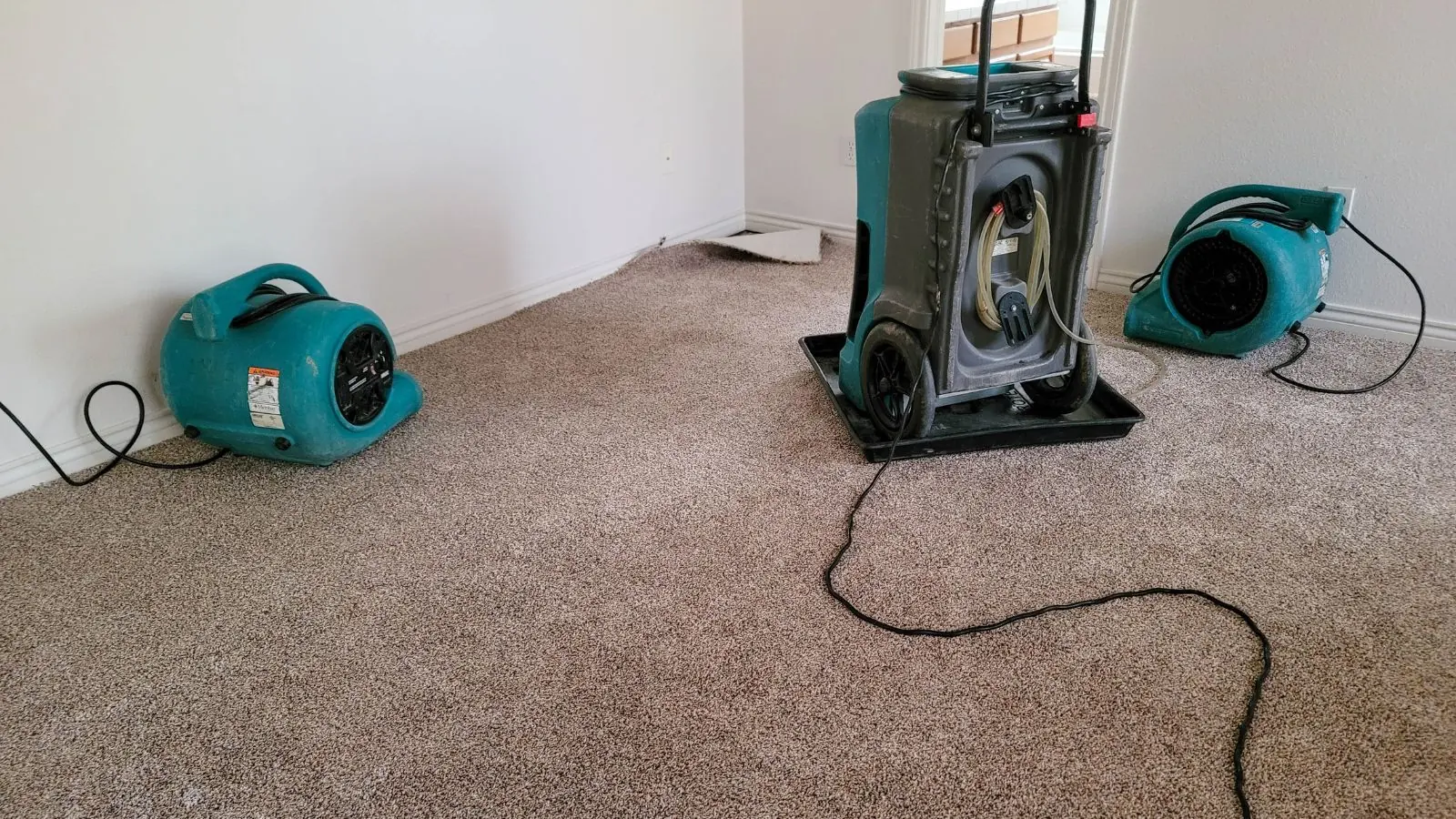
What sets the drying clock
For most structural drying, expect several days. That is a typical range, not a promise, because a handful of things push it shorter or longer. The honest answer to "how long" always begins with "it depends on what got wet."
The first factor is water category under ANSI/IICRC S500. Category 1 means clean supply water, category 2 means some contamination, and category 3 covers sewage and other grossly contaminated water. Higher categories mean removal of porous materials, and that changes the timeline.
Next come the materials. Carpet and pad, drywall, hardwood, subfloor and insulation each hold water differently. Then add the starting humidity in the building, how much air can move through the space, and how many dehumidifiers and air movers the crew sets.
Material by material
| Material | How it dries | What to expect |
|---|---|---|
| Carpet | Surface dries quickly once water is extracted. | Often hours to a couple of days, if cleanable. |
| Carpet pad | Absorbs and holds water. | Frequently removed and replaced rather than dried. |
| Drywall | Wicks water upward and dries slowly from the inside. | Several days, or cut out if saturated. |
| Hardwood | Releases moisture slowly and can cup. | Several days to a couple of weeks with floor drying systems. |
| Subfloor and framing | Dense, so moisture leaves gradually. | Several days, verified with meters. |
| Insulation | Holds water against framing. | Usually removed if wet. |
| Concrete | Very slow to release water. | Can take longer than any other material. |
Ranges like these shift with conditions. A crew re-checks the readings each visit and adjusts equipment instead of relying on the calendar.
Moisture readings and what "dry" means
Technicians use moisture meters, and sometimes thermal imaging cameras, to find water behind finished surfaces. Before drying starts, they record readings on affected materials and compare them with unaffected areas of the same material in your home. That dry reference becomes the target.
A material counts as dry when its readings come back to that standard, not when it merely feels dry to the hand. S500 describes this approach, and you can ask any company whether its crews follow it.
Call (424) 550-5662. The sooner extraction begins, the less there is to dry.
Starting quickly matters. Our emergency water removal crews pull standing water first, because every gallon left behind turns into humidity the equipment must handle.
Why a room can feel dry and still be wet
Surfaces dry first. Behind the baseboard, inside a wall cavity or under a floor, water can sit for days with no sign on the face of the material. Paint looks fine, and the carpet seems normal.
That hidden moisture is the reason a crew keeps measuring. It is also why mold risk rises when drying is stopped early, since damp cavities stay damp. Past roughly 24 to 48 hours without proper drying, the risk goes up.
What the equipment does, and why it is loud
- Air movers push dry air across wet surfaces and speed evaporation.
- LGR dehumidifiers pull the moisture out of the air so it does not settle elsewhere.
- Floor drying systems, such as mats, draw water from hardwood.
- Wall cavity systems push air into spaces behind drywall.
- Moisture meters and thermal cameras track progress between visits.
The noise is the cost of moving a lot of air. A typical setup hums like a row of box fans, and the dehumidifiers add heat to the room. It is a nuisance, but it is also the work happening.
How the crew decides to adjust
Drying is not set once and forgotten. On a typical visit the technician walks the affected rooms, logs moisture readings, checks the temperature and humidity of the air, and decides whether equipment should move. A wall that has dried can lose its air mover, and that unit may go to a floor that is lagging.
Day one is usually the heaviest, because extraction and setup happen together. By day three or four, readings often show which materials are close to done and which are stubborn. Hardwood and concrete tend to be the stragglers.
If readings stall, the crew looks for a cause. A wet wall cavity that was never opened, a closed door cutting off airflow, or a dehumidifier running in too much humid air can each hold things up.
What you can do while it runs
Keep doors and windows closed in the drying area as directed. Open ones bring in outdoor humidity and undercut the dehumidifiers. Do not turn equipment off, unplug it to charge a phone, or move it to a more convenient corner.
If a circuit trips, tell the crew instead of resetting repeatedly. Keep kids and pets out of the room, and take photos of the setup for your records. Our water mitigation page walks through the full process.
Equipment comes out when the readings hit the dry standard on every affected material. Once that happens, rebuild work can begin. If you have questions between visits, use the contact page or call the number above.
Harbor City details worth knowing
ZIP 90710 counts 9,912 housing units, according to Census Reporter, and not all of them are standalone houses. If you live in a unit that shares walls or floors with neighbors, water can travel beyond your own door. Tell your property manager right away and take photos, since drying may need to reach adjoining spaces.
If an unusual water bill started the problem, ask your water utility to check your usage.
Sources: Census Reporter (ACS), LADWP
Frequently asked questions
Can I speed up drying by opening windows?
Usually not. Open windows let humid outdoor air in and work against the dehumidifiers. Follow your crew's directions, since conditions in your home set the plan.
Is it normal for the equipment to run for several days?
Yes. Several days is typical for structural drying, though the actual figure depends on category, materials and conditions.
Does my insurance cover drying costs?
Drying logs often matter to an insurer, because they show how long the structure stayed wet. Gradual leaks and neglect often are not, and flood usually needs separate flood coverage. Ask your insurer what documentation it needs, and hold on to the moisture logs we provide.
How do I know it is really dry?
Ask to see the readings. A good crew records starting numbers, daily numbers and final numbers, and compares them with a dry reference in your home.
My Harbor City condo shares a wall with a neighbor. Who dries that side?
Their side belongs to them and their property manager, though readings on your wall can show whether moisture crossed over. Document everything and tell your association in writing.