
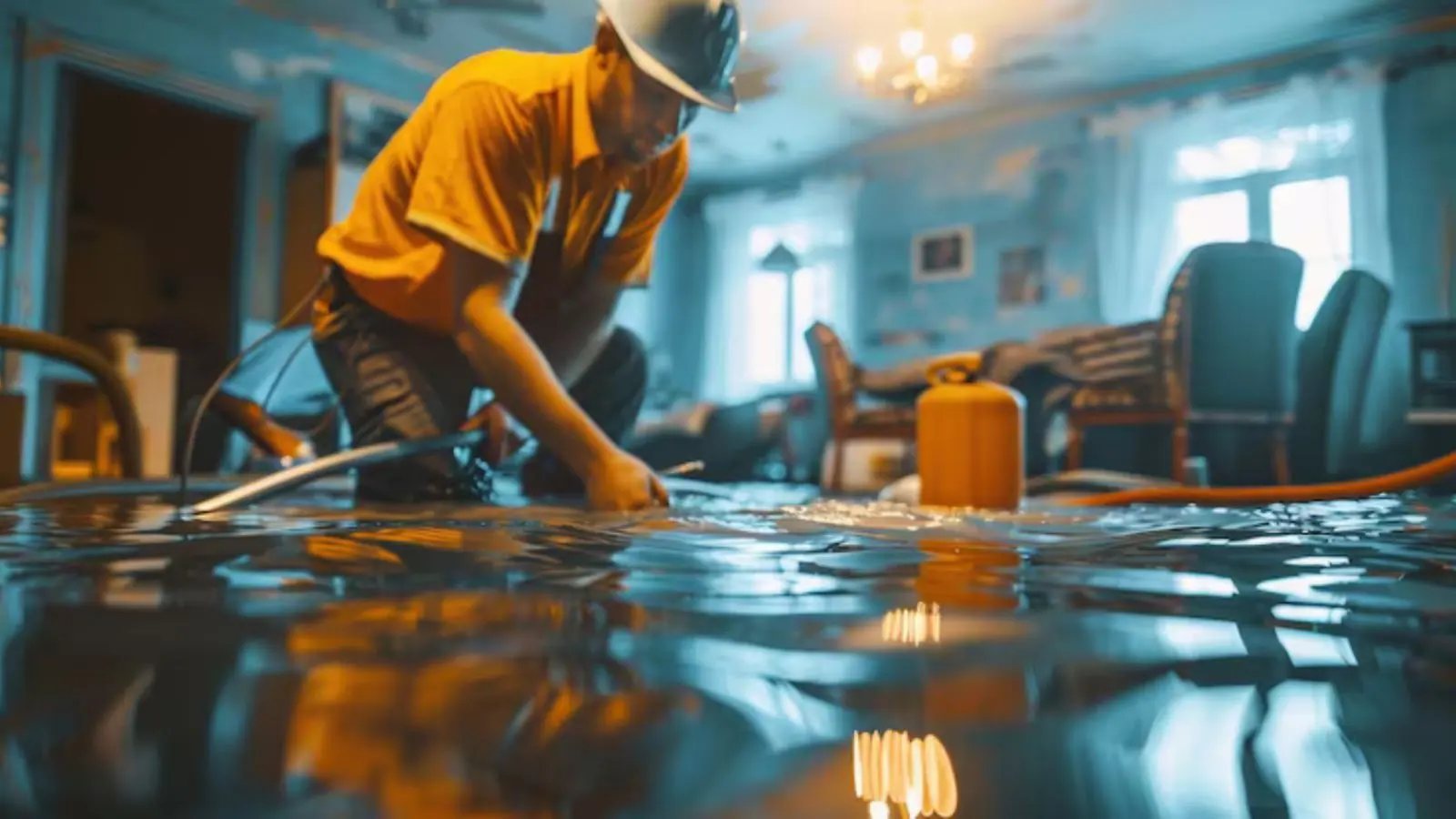
Start with safety, not the mop
Water and electricity are a bad pairing. If floodwater has reached outlets, the panel, a furnace or a water heater, stay out of that room. Cut power at the main breaker only if the panel is dry and you can reach it without stepping in water.
Electrical, gas and sewage
A gas smell, a buzzing outlet or water touching the panel means you leave the building and make that call first. Never wade through water that could be energized. If sewage is in the water, treat the whole area as contaminated and keep children and pets out.
Once the hazards are dealt with, move people and pets to dry rooms and lift electronics and valuables above the waterline. Take photos before anything is moved. Five minutes of pictures can save weeks of arguing later.
Water categories decide the plan
ANSI/IICRC S500 groups water into three categories according to its source and how long it has sat. Category 1 starts as clean supply water, Category 2 picks up significant contamination, and Category 3 is the sewage and river-water end of the scale. Water slides down that scale with time, so a clean spill left for days may be treated as Category 2.
Water that comes from outside, such as storm runoff through a doorway or up a floor drain, is generally treated as Category 3 because it has touched soil, pavement and sewer lines. That single fact drives most of the decisions below.
| Water category | What it means | What is usually done |
|---|---|---|
| Category 1, clean | Supply line break, tub overflow, rain through a roof before it touches much else | Extract, dry in place, keep most materials including carpet and pad if dried fast |
| Category 2, significant contamination | Washing machine or dishwasher discharge, toilet overflow with urine only, aged Category 1 | Extract, clean and treat the surfaces, discard the pad, dry or replace carpet based on its condition |
| Category 3, grossly contaminated | Sewage, storm or river flooding, long standing water | Remove carpet, pad, wet drywall and insulation, clean and disinfect framing, then dry the structure |
What gets dried and what gets thrown out
Hard, dense materials such as concrete, tile, solid lumber and metal can be cleaned and dried. Porous ones soak up contamination and are often discarded after Category 3 contact, including carpet pad, insulation, particleboard, mattresses and upholstered furniture.
Drywall sits in the middle. A short soak in clean water can sometimes be dried in place, but wall board wicked above the waterline or wetted by Category 3 water is usually cut out, often a foot or two above the highest wet mark so the remaining wall reads dry. Ask the crew to show you readings, because opinions are cheap.
Keep a running list of everything you discard, with photos, brand and rough age. Your insurer will probably ask for it, and memory fades fast after a bad week.
Our crew handles extraction around the clock. Call and the dispatcher will explain what the extraction involves.
Document, extract, then dry
Document the damage
Photograph every room, the waterline on walls, and damaged contents. Add a short video walkthrough and note the time the water arrived.
Extract standing water
Truck mounted or portable extraction units pull out the bulk of the water. Squeegee wands on carpet and hard floors remove what a mop leaves.
Open up wet assemblies
Baseboards come off, small holes are drilled behind them, and wet insulation is removed so air can reach the cavity.
Set air movers and dehumidifiers
LGR dehumidifiers pull moisture out of the air while air movers push dry air across surfaces. The count depends on room volume and how wet things are.
Monitor every day
Moisture meters and a thermal imaging camera show what the eye misses. Equipment moves or leaves as each material reaches its dry reference.
Expect drying to take several days, and thick materials like subfloor or hardwood can take longer. A room is finished when the numbers match a dry reference, not when it feels dry to the hand. Speed at the start is why emergency water removal comes before everything else.
Rebuild in the right order
The rebuild begins only after the structure reads dry. Insulation and drywall go back first, then texture, primer and paint, then baseboards and trim. Flooring goes in last so nothing drips onto a new surface.
Cost follows the water category, the affected area, the materials involved, the days of drying equipment and the rebuild scope. We put the scope in writing so you can compare it line by line. Our flood damage restoration page lays out the whole sequence.
Harbor City details worth knowing
Ken Malloy Harbor Regional Park lies on South Normandie Avenue and covers about 290 acres, including the 45-acre Machado Lake, which LA Sanitation manages. The lake's rehabilitation project includes treatment systems at major storm drain inlets. Storm water in the area moves through drains that feed those inlets, and water that has run over streets carries whatever was on them, so floodwater inside a home should still be treated as Category 3 until a crew says otherwise.
The California Department of Insurance says standard homeowners insurance does not cover flood, and NFIP flood policies normally take effect 30 days after purchase. That means a policy bought after the rain starts will not help this season. Check your policy now, and call the CDI help line at 800-927-4357 with questions.
Sources: LA Sanitation, California Department of Insurance, FEMA National Flood Insurance Program
Frequently asked questions
Is all floodwater Category 3?
Floodwater that comes in from outside is generally treated as Category 3 because of what it passed through. A clean pipe break inside the house is Category 1 at first. Either can drop down the scale if the water sits for a day or two.
Can I keep my carpet after a flood?
Carpet that took clean water and is dried quickly can often stay, with the pad replaced. Carpet touched by Category 3 water is usually removed because it cannot be cleaned to a dry, sanitary condition.
How soon should mold concern me after a flood?
Mold risk climbs on wet porous materials after roughly 24 to 48 hours, which is a typical range. Fast extraction and dehumidifier drying keep you ahead of it. See our water damage cleanup page for what follows.
Do I need a permit for flood repairs?
Check with LADBS before the rebuild begins. LADBS accepts permit filings online.
Does living near Ken Malloy Harbor Regional Park change my flood risk?
We cannot say. The park's rehabilitation scope covers dredging, treatment systems at storm drain inlets and dam work, and none of that sets the flood zone for your address. Look up your address on the FEMA flood map and ask your city building department about drainage.