
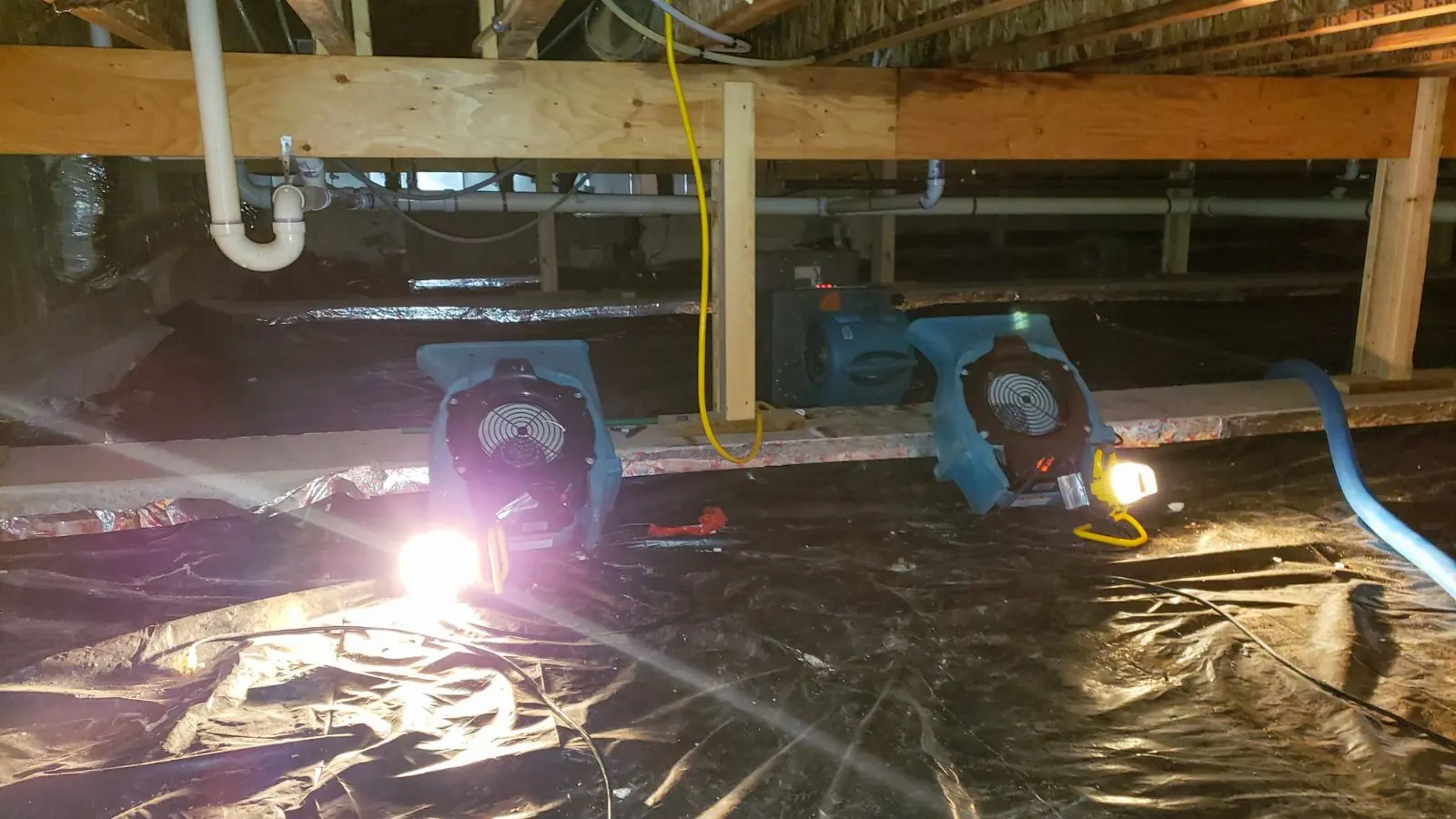
Why one crawl space never prices like another
If your home has a raised foundation, the space beneath the floor is part of the house, even though you rarely see it. When mold shows up down there, no two jobs look alike. A low, dry, easy-access space with one damp corner is a different project from a cramped, wet space where crews must work on their backs.
We do not publish dollar figures, because they would mislead you. What we can do is show what shifts the scope, so you can read any quote critically.
Our mold remediation crews begin with an inspection, moisture readings and a written scope. Only then does anyone talk about timelines or totals.
The cost factors, one by one
| Factor | Why it changes the scope |
|---|---|
| Access and clearance height | A small hatch and low joists slow every task and limit equipment size. |
| Area affected | More surface means more material removed, cleaned and dried. |
| Moisture source | A pipe leak, poor drainage or humid air each need a different fix first. |
| Insulation condition | Wet or contaminated insulation is usually removed, not cleaned. |
| Vapor barrier | Torn or missing sheeting lets ground moisture rise, so it may need replacing. |
| Containment | Sealing the work zone adds setup, plastic and air machines. |
| Drying days | Dehumidifiers and air movers run for days, and equipment time adds up. |
| Testing | Pre and post sampling, if requested, adds a step with its own cost. |
| Rebuild | Replacing subfloor, insulation or barrier is separate from the removal. |
Access deserves a closer look, because it is the factor homeowners underestimate. When joists sit low and the hatch is narrow, a worker may crawl on his belly dragging bagged insulation behind him. Every hour of that is labor, and it is why a quote for a tight space can look high next to one for an open space.
Notice that only a few of these rows are about the mold itself. Most describe the space and the water behind the problem. That is why two crawl spaces with similar-looking growth can end up with very different scopes.
Treatment, removal and prevention are different things
Treatment
Treatment means cleaning surfaces that can be cleaned, such as sound structural framing. It is chosen when the material is solid and the growth is on the surface.
Removal
Removal applies to porous materials that cannot be cleaned reliably, like soaked fiberglass insulation or damaged subfloor sheathing. Crews bag the material inside containment and carry it out, working to S520 practice.
Prevention
Prevention is about keeping moisture away afterward: repairing the leak, correcting drainage, adding or restoring a vapor barrier, and improving airflow. We cannot promise mold will not return, because the deciding factor is whether the space stays dry.
Find the water before you price the cleanup
Mold needs moisture. If a supply line is weeping, a drain has cracked, or water pools after rain, cleaning the framing without stopping that source is a short-term fix. A good scope names the source and says who is fixing it.
Where water entered through flooding or standing water, the drying phase is larger. Our flood damage restoration page explains how that process works, and the same moisture logic applies below the floor.
Call (424) 550-5662. We look at access, moisture and materials first, then give you a written scope before any work starts.
When to call another trade
Restoration is not waterproofing, and it is not foundation work. We remove contaminated material, dry the space and clean it. We do not regrade a yard, install drainage systems, repair cracked footings, or fix a settling foundation.
If the water comes from outside, a drainage or waterproofing contractor is the right call. If the foundation itself is shifting, you need a structural professional. A plumber handles broken supply or drain lines, and a roofer or gutter specialist handles runoff that dumps beside the house.
Sequence matters here. If a drainage contractor regrades the yard before the crawl space is dry, the damp material stays trapped, and the next rain tests the whole fix. Ask each trade to put its findings in writing. We can coordinate our dry-out schedule with theirs, so your repair does not seal damp material under new work.
Getting a quote you can compare
- Ask for a written scope listing access method, area, containment, equipment days and disposal.
- Ask who is responsible for the moisture source.
- Ask whether the quote includes rebuild work or only removal.
- Ask whether independent testing can follow the work.
- Compare scopes, not only totals.
If you share a street with neighbors in Lomita and have heard similar stories, remember that each house still needs its own inspection.
Harbor City details worth knowing
The California Department of Insurance notes that standard homeowners insurance does not cover flood, and that flood policies usually leave out mold that better upkeep could have prevented. For your home, that means a slow crawl space problem may sit outside both kinds of policy. Raise the question with your insurer before work begins.
Pull your policy and read the exclusions before you call anyone, so you know what to ask. Check the FEMA flood map for your address to see whether flood coverage is worth discussing. Ask LADBS whether a repair needs a permit.
Sources: California Department of Insurance, FEMA flood map service, Los Angeles Department of Building and Safety
Frequently asked questions
Can you give a price over the phone?
No, and be wary of anyone who does. Access, area and moisture source decide the scope, and they have to be seen.
Does homeowners insurance cover crawl space mold?
Crawl space moisture from a long-term drainage problem is commonly treated as maintenance, not as a sudden loss. Flood is usually excluded and needs separate flood coverage. Ask your insurer which documents it expects.
Do I need a vapor barrier after removal?
Often it is part of the rebuild when the old sheeting is torn or missing, though the right answer depends on the space. The written scope should say whether it is included. A plastic sheet laid over wet soil does not fix a wet crawl space by itself.
Will the mold stay away once it is cleaned?
We cannot promise that. If the space stays dry, the conditions that fed the growth are gone. If the moisture source remains, growth can return.
My Harbor City home has a raised foundation. How do I look inside safely?
Wear gloves, a dust mask and eye protection, bring a flashlight, and look for damp insulation, dark staining on framing, sagging sheeting and any active drip. Stay out if you see standing water near wiring. If anything is wet near electrical equipment, call your utility or 911 before calling us.