
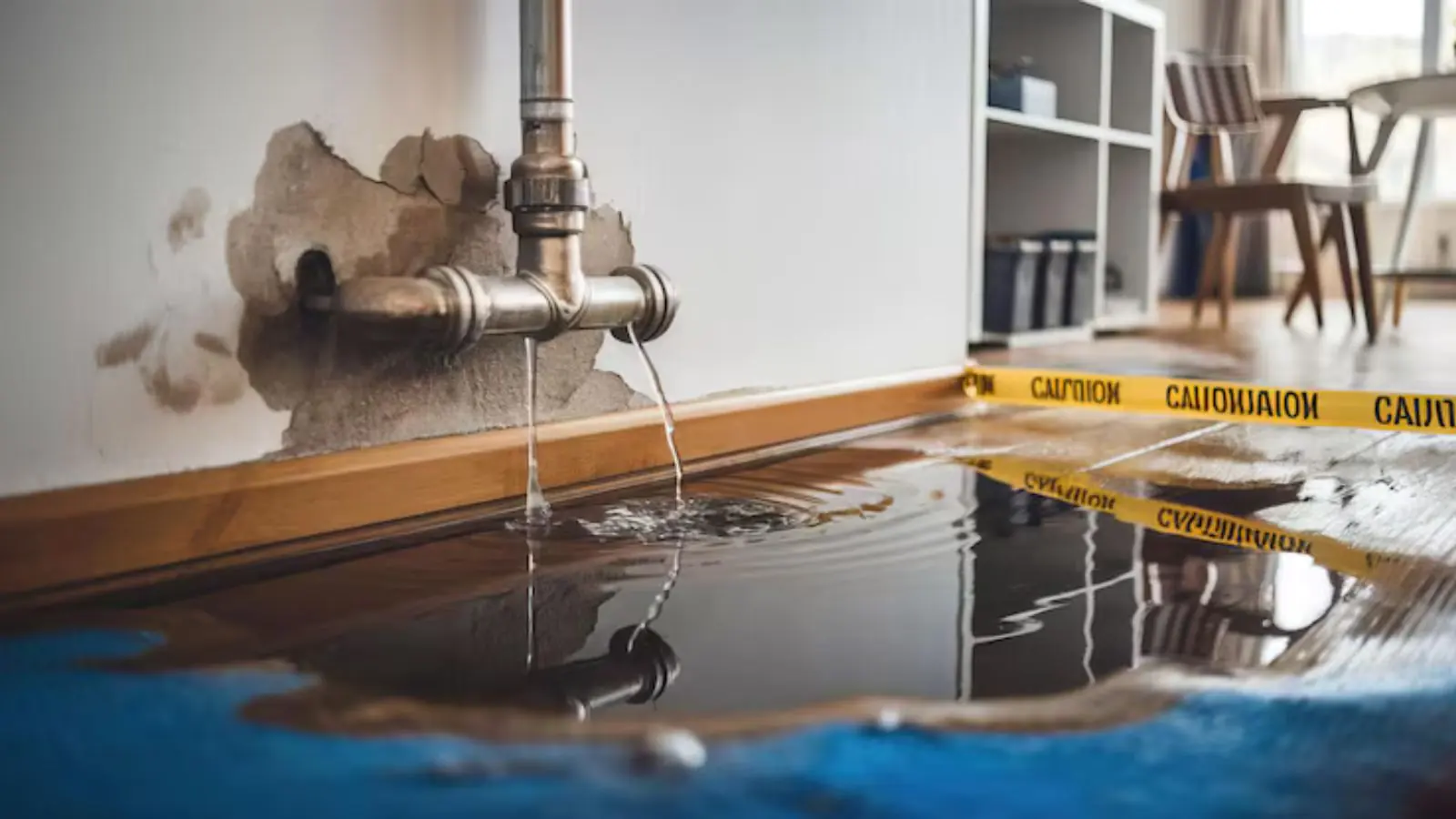
The first hour in order
- Find and close the main water shutoff valve.
- Open a faucet at the lowest point in the house to drain the lines.
- Check for electrical risk before you step into wet areas.
- Move valuables, rugs and small furniture out of the water's path.
- Take photos and short videos from a safe spot.
- Call a plumber for the pipe.
- Call a restoration company for the water.
The rest of this page explains each step, so you can work through them with a clear head.
Shut off the water first
The main shutoff is typically near the water meter or where the supply line enters the house. In many homes it is a round wheel handle or a lever on a pipe close to an exterior wall, and sometimes it sits in a box near the curb. Turn a wheel clockwise until it stops. A lever closes when it sits crosswise to the pipe.
Once the valve is closed, open a faucet at the lowest level of the home. That drains the pipes and relieves pressure so less water escapes from the break.
If you cannot find the valve, or it will not turn, or you think the leak is on the utility side, call LADWP. LADWP lists 1-800-DIAL-DWP (1-800-342-5397) for water main breaks. Do not force a stuck valve with tools.
Electricity and water do not mix
Power safety
If water has reached outlets, light fixtures or the electrical panel, stay out of the area. Switch off power at the panel only when the floor in front of it is dry. If the panel is wet, or you smell gas or hear buzzing, leave and call 911 or your utility before you call the restoration line. If sewage is involved, stay out as well.
Never wade through standing water to reach a switch. A dry hallway and a rubber-soled shoe do not make wet wiring safe. A professional can restore power after the area is checked.
Protect belongings and document the damage
Lift what you can without taking risks. Move books, electronics, photos and small furniture to a dry room. Put aluminum foil or plastic blocks under furniture legs if the carpet is wet.
Then take photos and video from a safe spot, wide shots first and close-ups after. Capture the broken pipe, the wet walls, ceilings and floors, and the labels on any damaged electronics. Note the time the pipe burst, the time you closed the valve, and what was affected. Insurers look for dates and detail, and a record is far easier to build while the scene is fresh.
Call (424) 550-5662, our 24/7 emergency dispatch. Tell us what burst, where the water is, and whether the main is off.
Why speed matters
A pipe under normal household pressure can put out a surprising volume of water in a short time. A small crack that looks like a drip at the ceiling may be emptying a line inside the wall. Each minute the main stays open, more water reaches carpet, drywall and subfloor.
The early hours are also when most of the avoidable loss happens. Drywall wicks water upward, pad soaks like a sponge, and the clock toward mold risk starts at roughly 24 to 48 hours. Water that comes from a clean supply line is category 1 at the start, but it can move into a worse category if it sits.
Who to call, and what not to do
Two calls matter. A plumber fixes the broken pipe, and a restoration crew deals with the water already in the building. They are separate jobs, so make both calls rather than waiting for one to finish.
Our emergency water removal team extracts standing water and starts drying, and the water mitigation process continues from there.
- Do not use a household vacuum on standing water. It is an electrical shock hazard and will damage the vacuum.
- Do not walk under or on a ceiling that is bulging or sagging. It can hold gallons of water and may give way.
- Do not turn on ceiling fixtures under a wet ceiling.
- Do not leave soaked carpet and pad in place, because they hold water against the floor.
- Do not wait to see if it dries on its own.
What a restoration crew does when we arrive
We start with safety and a moisture map. Using meters and thermal imaging, we trace where water traveled, since it often runs under flooring and into wall cavities beyond the visible wet spot.
Extraction units remove standing water, and wet carpet pad or saturated drywall may be removed. Air movers and LGR dehumidifiers are then set, and we return to check readings until materials meet the dry standard. We explain scope and price before work starts. For nearby areas, we also take calls from Wilmington and Carson.
Harbor City details worth knowing
If you think the leak is on the utility side of the meter, that is the number to call, and it is also worth calling if the valve will not close. Harbor City is part of the City of Los Angeles, so the 311 line is another place to ask where to direct a street-side problem.
Ask LADBS whether your pipe repair needs a permit, since its plumbing permits page covers modifications to potable water piping.
Sources: LADWP news site, Los Angeles Department of Building and Safety
Frequently asked questions
Will insurance cover a burst pipe?
A pipe that fails overnight is the kind of sudden event homeowners policies commonly address, whereas a drip that ran for months usually is not. Burst pipes inside the home are generally not a flood policy matter. Your insurer can tell you what your policy requires.
Should I call the plumber or the restoration company first?
Close the main, then call both. The plumber repairs the pipe, and the restoration crew handles the water that has already spread.
Where is my main shutoff?
Typically at the meter or where the supply line enters the house. Find it now, label it, and make sure everyone at home knows where it is.
How soon does mold become a concern?
The risk rises after roughly 24 to 48 hours of wet materials. That is why drying should begin quickly.
The pipe broke in my Harbor City home but the valve is on the street side. What now?
A leak on the street side of the meter is a question for the utility. Call them, then call us about the water inside, since extraction can begin while the utility handles its side.