
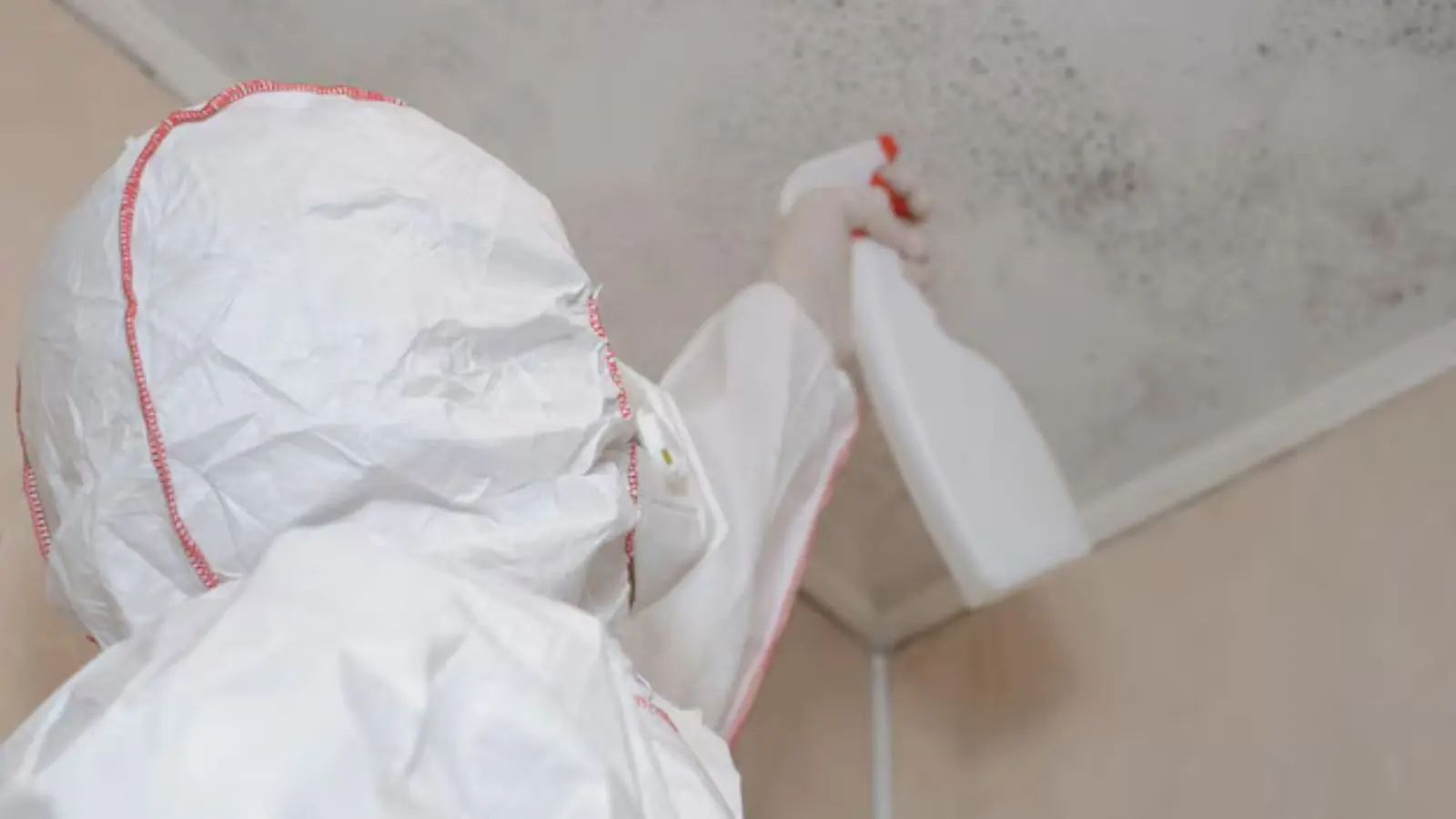
What those dark spots usually are
A dark patch above the shower can be one of three things, and color alone will not tell you which. It may be mold growth, a film of soap and dust that settled on a damp surface, or a stain from water arriving from somewhere else. Even an experienced technician usually wants a closer look before naming it.
Mold growth tends to look speckled or fuzzy. It clusters in corners, around the fan grille, and along the seam where ceiling meets wall. Soap and dust film is flatter and more even, and it often smears when you press a damp cloth against it.
A leak stain behaves differently. It usually has a tan or brown ring at its edge, and it may darken after rain or after someone upstairs runs a bath. If the spot sits under a second-floor bathroom or under the roof, a leak belongs on your list of suspects.
Black mold is a label, not a diagnosis
People use the phrase for any dark growth, but nobody can identify what is growing by looking at its color. We do not diagnose, and we do not make health claims. If you want to know what a spot is, sampling and testing follow ANSI/IICRC S520 practice, and any question about your health belongs with your physician.
Why bathroom ceilings collect moisture
A ten minute hot shower pushes a lot of warm vapor into a small room. That vapor rises, meets the ceiling, and condenses wherever the surface is cooler than the air. Paint, drywall paper and the dust on top of them then stay damp for hours.
Mold needs moisture to grow, so a ceiling that stays damp most mornings is the setup. Add a fan that spins but barely moves air, a bathroom with no window, or a duct that has slipped loose above the ceiling, and the vapor has nowhere to go.
You can test the fan yourself. Hold a single square of toilet paper against the grille while the fan runs. If it does not cling firmly, the fan is moving little air, and a damp ceiling is no surprise.
Cleaning a small surface spot safely
A spot smaller than your hand, on a hard painted surface, with no soft or stained drywall around it, is something many homeowners handle on their own. The goal is to remove surface residue without soaking the ceiling or spreading spores through the room.
- Open the window or run the fan, and keep the door closed to the rest of the home.
- Wear rubber gloves, safety glasses and a dust mask.
- Wipe with a cloth dampened in warm water and dish soap. Do not scrub hard, because that can tear the paint and drywall paper.
- Dry the area with a clean towel and run the fan afterward.
- Bag the cloth and throw it out instead of rinsing it in the sink.
Never mix cleaners
Do not combine bleach with ammonia-based cleaners, or with any other product. The mixture can release toxic gas. Pick one product, use it alone, and keep the room ventilated.
When to stop wiping and make a call
Stop cleaning if the patch is larger than your hand, if the paint is bubbling, or if the drywall feels soft when pressed. The same goes for a spot that returns within weeks of cleaning. Those signs point to moisture inside the ceiling, and wiping the surface does nothing for that.
A musty smell with no visible source is another reason to ask for help. So is any stain directly below an upstairs bathroom or an exterior wall. Our mold remediation team starts with moisture readings and a written scope, then works to S520 practice.
Sagging ceiling or water near a light fixture
Stay out of the room. Do not touch switches or fixtures. Cut power at the panel only if you can reach it while standing on dry ground. If a bathroom fan or light fixture is wet or humming, switch it off at the breaker only if the panel is dry, and otherwise call an electrician.
If a leak has already damaged the ceiling, the drywall may need replacing once it is dry. That rebuild falls under water damage repair, and it is easier to price after the moisture source is found.
Fixing the ventilation
Cleaning without fixing the air problem sets you up for a repeat. Run the fan during every shower and keep it going for about 20 minutes afterward. Crack the door so replacement air can flow in, and squeegee the shower walls to cut the water load.
Check where the fan exhausts, too. A duct that ends in the attic instead of outdoors, or one that has pulled apart at a joint, dumps wet air right above your ceiling. An electrician or HVAC contractor can replace a weak fan or reconnect ducting, and that work sits outside what a restoration crew does.
We cannot promise mold will not return, because moisture is the deciding factor. Better airflow and a dry ceiling lower the odds, and the habit of running the fan does most of the work.
Who answers which question
| Your question | Who to ask |
|---|---|
| Is this affecting my health? | Your physician |
| Is there a leak in the pipes above? | A licensed plumber |
| Is the roof letting water in? | A roofing contractor |
| Is it mold, and how far has it spread? | A mold remediation company working to S520 practice |
| Does the damaged ceiling need rebuilding? | A restoration or repair contractor |
| Does my repair need a permit? | LADBS |
Call (424) 550-5662 and describe the spot. We will tell you honestly whether it sounds like a wipe-and-ventilate job or something that needs a moisture check.
Tenants should tell the landlord or property manager in writing and attach photos. Our contact page lists how to reach us, and the service area page shows which neighborhoods we cover.
Harbor City details worth knowing
Census Reporter's ACS profile of ZIP 90710 lists 9,912 housing units, which is a lot of bathrooms and kitchens to keep ventilated. That count includes plenty of apartments and condos alongside single-family homes, so a stain on your ceiling may be coming from a neighbor's bathroom. Photograph it, note the dates, and report it to your building manager in writing.
If the ceiling needs to be opened or rebuilt, ask LADBS whether your repair needs a permit before work begins.
Sources: Census Reporter (ACS), Los Angeles Department of Building and Safety
Frequently asked questions
Is black mold on a bathroom ceiling dangerous?
We cannot answer that, and we do not diagnose or make health claims. Whether a particular exposure matters for you or your family is a question for your physician. What we can do is find the moisture and deal with the growth following S520 practice.
Can I paint over the spot?
Paint over an active moisture problem and the stain usually reappears, sometimes with peeling. Clean the surface, dry it, and find out why it was wet first.
Does a dehumidifier or vent fan fix the problem alone?
They help by drying the air, but they do not repair a leak or a disconnected duct. Think of them as part of the answer once the source is found.
Will insurance cover ceiling damage from a bathroom leak?
Coverage for bathroom moisture usually hinges on whether the water was a one-time event or a slow drip that went unfixed, so read the exclusions in your policy. Keep receipts for any cleanup you pay for, and ask your insurer what it wants to see.
I rent an apartment in Harbor City and the spot is under the unit above. What now?
Tell your landlord or property manager in writing and attach dated photos. A leak from upstairs has to be stopped at its source, and that repair is theirs to arrange. Our mold remediation service can assess and scope the affected ceiling once access is arranged.